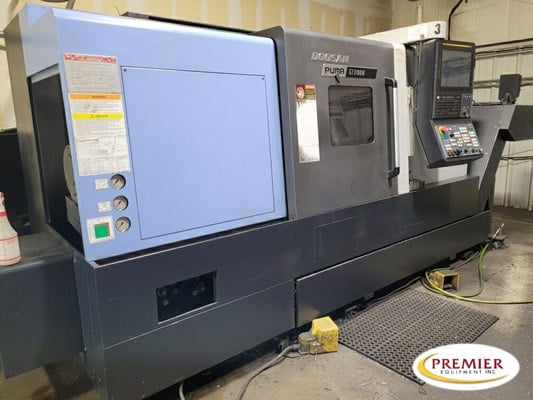

A shop owner in Georgia called us a few years back. He picked up a used CNC turning center at an auction. The pics looked good, ran smooth when he checked it, and the price was a steal. Six months in, the spindle bearings were toast, the turret was all over the place, and he ended up spending more on repairs than he saved. We’ve cleaned the machine just enough to look okay at first glance. Nobody lied, exactly. Nobody told him what to ask, either.
That story isn’t unusual. We’ve been selling used CNC machines since ’88. Seen this story play out many times. It’s a win sometimes, and other times, it’s a loss. Most shops that picked the right machine got about ten years of solid use for way less than a new one would cost. Shops that bought blind got burned. Before you spend, know what you need.
This guide covers the basics on deciding if you should go new or used, picking the right lathe, top brands, inspection tips, and getting a fair deal. Whether you buy from us or someone else, this is what we’d tell you if you were standing in our shop asking the question.
New vs. Used — The Real Math
The obvious reason to buy used is price. A new top-brand 2-axis CNC typically starts at $80,000. High-cap models can go over $500,000. A used one costs 30–60% less. That’s a big chunk of change, especially if you’re ramping up your shop.
But price isn’t the whole picture. expect new machines to roll in anywhere from 6 to 18 months. Depends on the maker and your specs. Most of the time, if you need to boost production in 90 days, new machines just won’t do it. Once that new machine rolls in, you’re gonna have a learning curve to tackle. You’ll need to get comfy with the controls, fine-tune the tools, and train your crew. A used machine that your team already knows, though, can start cranking out parts in just a few days.
You can save a bundle on depreciation by buying used. Simple as that. Generally, a machine loses most of its value once it hits the three to five-year mark. In most cases, a machine that set you back $180,000 when new might only run you $75,000 after five years, assuming it’s been well-taken care of and is still in good shape. The deal you’re getting is because the first owner took the big depreciation hit.
Now, that doesn’t mean used is always the way to go. If you’re working in aerospace or medical, where tight tolerances and documented calibration are crucial, new equipment with a warranty is a must. When customers demand new-machine traceability, a used lathe can generally be a pain. In most cases, if your crew is new to CNC, a new machine with factory training and service might save you more trouble than the added cost.
Be honest about which camp you’re in. For most job shops adding another lathe or production shops looking to expand, a solid used machine usually does the trick. Shops dealing with warranty-critical or first-article work under tight rules should really think twice before opting for a used machine.
So, what kind of CNC lathe do you actually need?
First off, you gotta figure out what your part mix actually looks like before you jump into choosing specific machines. The answer drives everything else.
Generally, the 2-axis turning center is the backbone of the industry. In most cases, it comes with two linear axes — Z for the length, X for the diameter — plus the spindle rotation. That’s it. For most shops, especially the newbies to CNC turning, this setup is typically the way to go. This machine handles a ton of turned parts, is straightforward to program, and you can usually find decent used options at a range of price points. Generally, for moderate volumes of shafts, bushings, flanges, and the like, a 2-axis machine is all you need.
In most cases, a sub-spindle lathe adds a second spindle at the rear, grabbing the part once the main spindle is done and finishing the backside in one go. Typically, if both ends of a part need work, this setup trims cycle time and eliminates re-chucking errors. However, it’s worth noting that the added complexity means more maintenance, more inspection, and a trickier setup to learn.
Y-axis lathes and turn-mill centers usually add milling capabilities to your turning machine, giving you more versatility. In one setup, you can handle cross-drilling, flats, slots, and off-center features. Generally, this approach gives most shops a major efficiency kick. In most cases, if you’re only working on basic turned parts, you’re likely overpaying.
Nowadays, most CNC lathes come with a slant-bed design, typically angled between 30 to 45 degrees. This design usually helps with chip evacuation and makes it a lot easier for operators to get to the work zone. Generally, you’ll still find those older flat-bed lathes around, and they can be solid choices. But let’s face it, slant-bed designs have been the go-to for a while now, and there’s a good reason for that.
In most cases, if you’re cranking out high-volume barstock parts, a bar feeder is definitely worth looking into. A bar feeder keeps your machine running on autopilot, turning what used to be a manual, attended process into something pretty close to lights-out production. Running long programs on consistent part families is what makes the economics work. For job shops dealing with ever-changing setups, a bar feeder just adds complexity without much benefit.
For the majority of shops out there, a reliable 2-axis turning center is the smart choice. Throw in extra features only when the job demands it, not a second before.
Which Brands Actually Hold Up?
Generally, every brand has its loyalists, and you’ll come across machines that have been humming along for two decades, and others that were problematic right out of the gate. In most cases, when you’re in the market for a used machine, don’t get caught up in what’s supposedly the best brand. Your priority should be brands that offer good parts, reasonable service fees, and a history of staying the course. This way, you’re making a smart, informed choice.
Haas is the easiest brand to own in the United States, full stop. In most cases, Haas machines are everywhere, and their controls are pretty straightforward. Generally, machinists pick them up fast. For most shops, there’s a Haas Factory Outlet within driving distance. Haas turning centers aren’t the highest-precision machines on the market — if you’re pushing true micron-level work, you’ll want something else — but for the vast majority of production and job shop turning, they’re reliable and easy to support. The used market for Haas is huge, so you’ll usually find competitive pricing. Generally, you can pick up used ST-10s and ST-20s at a range of prices.
Mazak makes serious production machines. In most cases, the Quick Turn series — QT-200, QT-250, QT-350, and their variants — are reliable workhorses. You’re likely to see these machines in job shops and on production floors all over. Mazak lathes hold tolerances well, the spindles are built for heavy use, and the controls, while more complex than Haas, are powerful once your team learns them. Once you get the hang of it, Mazatrol conversational programming can be pretty efficient for similar parts. Parts and service are available, but they’re not as easy to find as they are for Haas. In most cases, you should budget a bit extra for those service calls.
DMG Mori / Mori Seiki machines are popular in aerospace and medical shops where build quality and precision matter more than acquisition cost. These machines are solidly built with high-quality materials. On the downside, they do cost more upfront — pricier to buy used, more expensive to maintain, and parts can take a bit longer to arrive. If you can handle the precision, they’re definitely worth the investment. Most of the time, a general job shop pays more than necessary for that extra precision.
Okuma builds extremely rigid machines — great for heavy cuts and difficult materials. The OSP control’s a closed system, so you’re locked into Okuma-trained techs, parts, and software updates. Most folks learn OSP and stick with it ’cause it’s powerful and reliable. First-timers usually find the learning curve pretty steep. With Okuma machines, you’re payin’ more upfront, but they keep their value, so you’ll get more back when you sell.
Doosan / DN Solutions is the most underrated brand in this conversation. You can’t go wrong with PUMA series lathes. They’re Korean-made, solid, and offer great value, which is why you’ll see ’em in a lot of job shops. Doosan’s now DN Solutions, but parts and service are still a breeze, and these machines are solid as a rock. If you’re lookin’ at a Doosan PUMA alongside other used CNC lathes, don’t let the name change trip you up; it’s still a solid pick in most cases. The community at Practical Machinist has extensive threads on Doosan reliability that are worth reading.
Older European lathes, especially the German and Italian ones, are solid as a rock, but good luck finding parts in the U.S. They can cost you an arm and a leg. Most of the time, older Daewoo and some Korean brands from the late ’90s can go either way, depending on how well they’ve been maintained. You can still find ’em, but make sure the price is right and parts are easy to come by.
The Inspection Checklist — What to Look For
This is where deals are won and lost. Don’t judge by looks alone. There’s stuff you gotta check. Take your time and go through each step.
Spindle
- Ask for the maintenance log. Always ask about spindle hours and the last service date. No maintenance records? Red flag. Price it with the risk in mind.
- Spindle hours context: Haas spindles are commonly rebuilt in the 15,000–20,000 hour range. Mazak and Okuma spindles are usually heavier, so they can take more. How long they last depends on how well you’ve treated and maintained them. A machine with 25,000 hours that’s been run steady and with good oil ain’t the same as one with 12,000 hours that’s been pushed hard. Haas publishes spindle specs for their machines if you want to benchmark.
- Check spindle runout with a test indicator. Most times, you’ll wanna stick a precision ground bar in the spindle and give it a good sweep. If you see over 0.0002″, you’ve got some serious talkin’ to do. A bit of runout in an older machine is pretty normal, but don’t overlook it. Usually, it means the bearings are wearin’ out or there’s some damage you gotta check.
- Listen at different RPMs. Start low, ramp up, then dial back down. If you hear grinding or whining that changes with the speed, it’s a clear red flag. A smooth hum is what you want.
Ways and Guideways
- Linear guideways (most machines built in the last 20 years): try to rock the turret or carriage perpendicular to its direction of travel. Feeling play usually means the guides or carriages are worn out. In most cases, a little play isn’t the end of the world, but it shows the machine’s seen better days.
- Box ways (older machines and some heavy-duty designs): look for uneven wear patterns, especially near the chuck end where most of the cutting happens. Generally, this part takes the most abuse and shows wear first.
- Run each axis through its full travel under program control. You should give it a feel and listen for any binding, hesitation, or irregular motion. Backlash is usually how ballscrew wear shows up. In most cases, using an indicator with a simple back-and-forth program can help you check this.
Turret
- Index through every position, several times. Always ensure the turret moves smoothly and locks up tight every time. Any hesitation, slow indexing, or failure to lock generally means there’s a problem.
- Check repeatability. Mount an indicator to a fixed point, generally, and place a reference in one turret position, then index away and back. A good turret should be able to repeat within 0.0001–0.0002″. If it can’t, you’re likely in for some turret service.
- Look for crash evidence. Check the turret face for dings, chips, or any bent spots. Most of the time, checking the tool holders in the seller’s inventory gives you a real insight — bent shanks on crashed tool holders usually show how the machine was handled.
Coolant and Hydraulics
- Coolant leaks around seals and through-spindle connections are usually fixable, but they tell you something about maintenance habits. In general, if a machine’s been leaking coolant for months without a fix, it points to poor maintenance.
- Hydraulic pressure should be steady under load. In most cases, if you see pressure jumping around, it’s likely the pump or seals are giving you trouble. These are fixable but not cheap.
- Look at the coolant tank. Pull the cover. Generally, a tank packed with black sludge, rust, and chips says more about how the machine’s been treated than anything else. Good shops clean their coolant tanks. Neglectful shops don’t.
Control and Electrical
- Power the machine up and run a simple program — even just a few axis moves and a turret index cycle. Make sure you keep an eye out for any error codes or alarms when you fire it up. Now, some alarms aren’t a huge deal, but others can point to some serious electrical problems.
- Ask about the control vintage. Fanuc and Siemens controls from 2000 onwards are typically solid as a rock. Parts and support are still around. Pre-2000 controls can be trouble. Some boards aren’t made anymore. But it’s not always a no-go. Just know what you’re getting into.
- Check the electrical cabinet. Watch for amateur electrical work. Loose wires, messy relay swaps, or water damage can really mess things up. Fixing electrical problems on CNCs generally hits your wallet hard.
The Test Cut
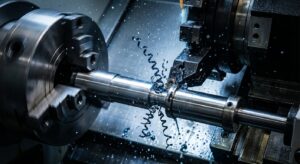
If the seller won’t let you run a test cut, ask why. A machine that’s open can run a part. Set up a quick program. Turn some aluminum or steel. Measure it. Make sure to check the diameter a few times; you gotta catch any taper. Check the surface finish. In most cases, this gives you the best insight into how the machine is performing.
Documentation
Ask for maintenance records, any service history, and known issues. Ask if the machine ever crashed. Folks who keep records don’t just track stuff, they take better care of their machines. Not having the docs ain’t the end of the world, but you’re definitely rolling the dice.
How to Negotiate
Start by knowing the market. You can usually find similar machines on eBay Industrial, Machinio, and a few dealer sites. Same brand, age, and specs. Most times, you’re after a fair price, not the cheapest or most expensive option. Knowing the market value gives you a solid leg to stand on when you’re negotiating.
Deferred maintenance is usually your ticket to a solid deal. When the inspection finds issues, go get some quotes. Real numbers give you leverage. You might say, “The coolant pump’s fried, and I got a quote for $800. It’s better than, “The machine seems a bit rough.”
Don’t anchor too low. If you’re not serious about a machine, your offer’s gonna be low. They’ll pass. Your offer should be based on your market savvy and the machine’s condition, plain and simple. Don’t waste time, but negotiate smart.
Make sure you check the rigging and transport costs before you lock in the price. Moving a machine’ll set you back between $1,500 and $5,000, depending on how far it’s going and how it’s set up. Our rigging and trucking team handles this regularly, and costs vary more than most buyers expect. Saving $500 on the machine don’t mean much if the move ends up costing you more than you thought.
Hit the end of the quarter, and dealers’ll cut deals to move inventory. It’s a maybe, but worth thinking about.
Total Cost of Ownership — The Numbers Most Buyers Miss
The machine price is just the start. Figure in the cost to get it set up and level. Simple setup runs about $500. Could go up to $2,000 if you need special work. If it’s not level, it ain’t gonna work right, no matter how fancy it is.
A bare machine needs tooling. Tool holders, boring bars, turning inserts, chuck jaws, a boring bar holder, and a drill chuck — it all adds up, you know. You’ll spend $2,000 to $5,000 just on tooling. It gets pricier if you’re buying a new type of machine. Don’t buy the machine without budgeting for the tools.
If the operators ain’t familiar with the control, you’re gonna need some training. Slower production for a week can cost you. Some controls, like Mazatrol, take longer to learn. Others, like Haas, are easier to start with.
Think about ongoing service. Got a tech who can do routine maintenance and small fixes? Or do you plan on just calling for help? That affects how much repairs cost you. Haas and Doosan machines? Local techs are usually around. Some European or old controls? You might need factory service. Costs more, takes longer.
Resale value matters if you ever want to sell or trade. Haas and Mazak lathes keep their value. There’s always a market. Older Euro machines and rare brands don’t sell as well. The Modern Machine Shop tracks industry trends that can give you a broader sense of where the market is moving. The AMT (Association for Manufacturing Technology) also publishes data on machine tool orders and trends worth following if you’re making longer-term equipment decisions.
If you need to spread the cost over time, financing is available on used equipment — terms up to six years and amounts up to $500,000 through our financing partners. Make sure the monthly payment fits your budget. Do the math first, don’t fall in love with the machine till you’re sure.
Frequently Asked Questions
What’s a reasonable price for a used CNC lathe?
Used machines typically cost 30–60% of a new one. It depends on age, hours, and how good it looks. A solid 2-axis turning center from Haas or Doosan’ll run you between $15,000 and $45,000. A late-model Mazak or Okuma with a sub-spindle’ll run you $80,000 to $150,000 or more. Look at Machinio, eBay Industrial, and dealer stock. See what similar machines go for.
How many spindle hours is too many?
There’s no perfect age limit. It depends on the brand and care. Haas spindles usually get rebuilt at 15,000 to 20,000 hours. Mazak and Okuma spindles last longer. They’re built heavier. A machine with 30,000 hours that’s been looked after is way better than a neglected one with just 8,000. Ask for the maintenance log. If they don’t have one, factor that risk into your offer.
Should I buy from a dealer or a direct seller?
Both can work. Buyin’ direct from a shop that’s upgradin’ usually means you’re gettin’ a machine with a solid history and a seller who’s eager to make a deal. You’re takin’ a risk with limited options if somethin’ messes up after the sale. A good dealer’ll inspect the machine, answer your tech questions, and handle the rigging. It’s pricier, but you get reliability. Make sure you’re powering it up and runnin’ a test cut before you commit.
What’s the diff between a CNC lathe and a CNC turning center?
They both do the same thing, rotate the workpiece and cut away material. “CNC lathe” is the older, broader term. A CNC turning center’s basically a fancy, enclosed lathe with a bunch of extras for serious production. In the shop, we don’t sweat the small stuff—most of the time, we use these terms the same way in talks and on the equipment lists.
Can I finance a used CNC machine?
Yes. Many dealers offer financing on used machinery with terms from 1 to 6 years and amounts up to $500,000. Financing a used machine works just like a new one. The machine backs the loan. Rates vary by lender, term, and your credit profile. If you’re cash-strapped, it’s smarter to finance a solid used machine than to reach for a new one. Make sure the payments fit the money the machine brings in.
If you have questions about a specific machine you’re looking at, or want to talk through what type of lathe makes sense for your work, reach out to our team. We’ve been in this game since 1988, seen it all, and we’d rather help you pick the right machine than steer you wrong. You can also browse our current used CNC lathe inventory to see what’s on the floor.