
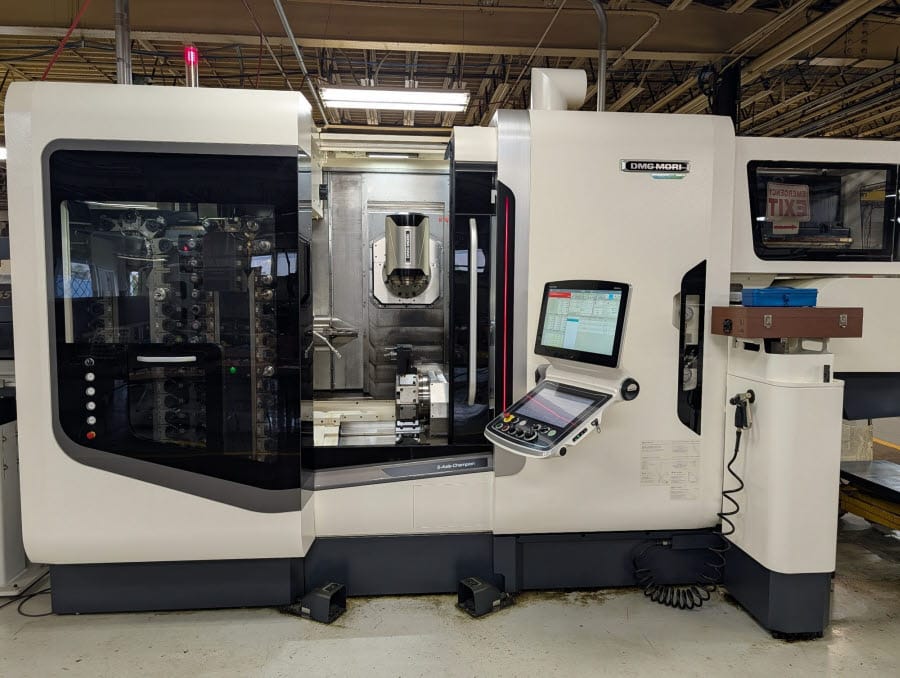
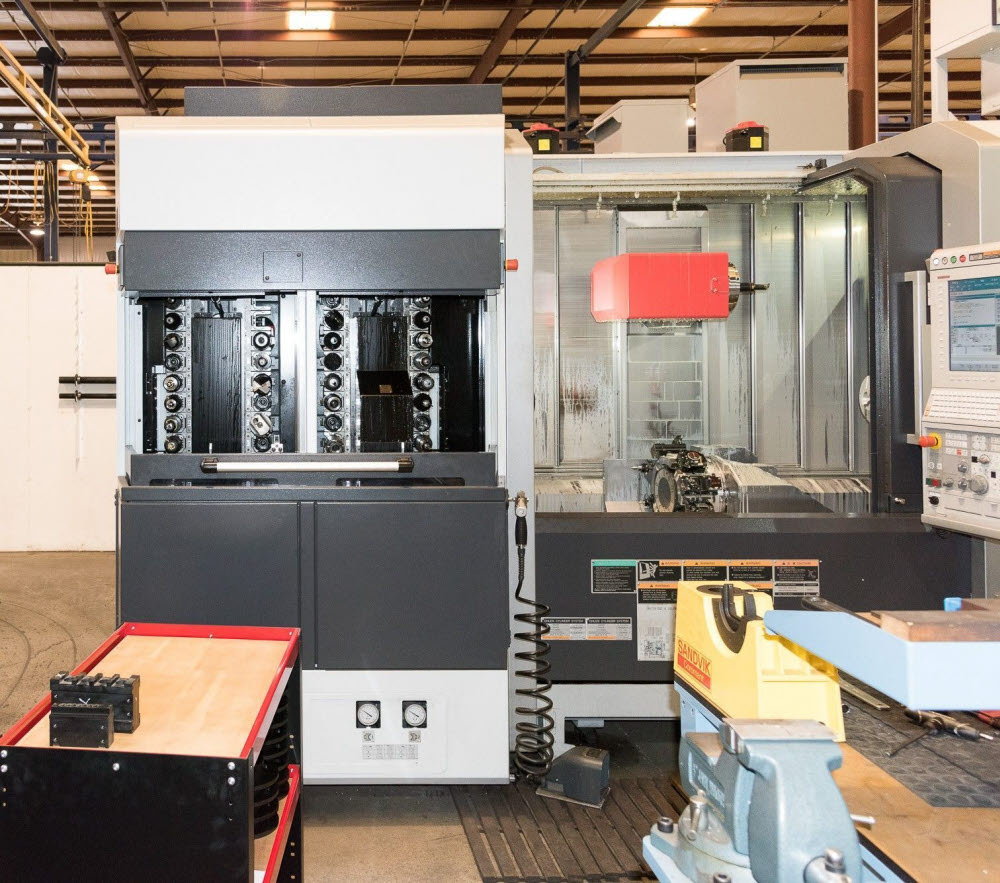
Give the NTX a job that uses its milling capability
A shaft with angled holes, milled faces and features on both ends can create a lot of handling between a lathe and a machining center. An appropriately configured NTX can bring those operations together. The benefit is fewer transfers and fewer opportunities to lose the relationship between features when the part is reclamped.
That does not mean every turning job belongs on an NTX. Straightforward shafts or bushings may run economically on a simpler machine. Before paying for a mill-turn platform, identify which setups it would remove and how much programming and proving time the new process needs. A short batch with a familiar route may not justify moving everything at once.
NTX versus NLX: different ways to combine operations
The NTX uses a B-axis tool spindle for turn-mill work. The NLX is a turret-based turning family, with milling and additional spindle capabilities varying by configuration. Both can reduce secondary handling on suitable parts, but they are not interchangeable machines.
| Machine approach | Work that may justify it | Main buying tradeoff |
|---|---|---|
| NTX B-axis turn-mill | Turned parts with angled features or substantial milling | Tool access and process flexibility versus programming and setup demands |
| NLX with suitable driven tooling | Turning-led parts with drilling, flats or other secondary features | Turret tooling and installed axes must suit the feature locations |
| Turning followed by separate milling | Jobs already supported by existing equipment | More handling, but the two operations can run on separate machines |
The right comparison is a proposed process for your part. A machine with more axes can still be the wrong purchase if its working space, tool reach or spindle arrangement does not suit the job.
Read the complete model and generation
NTX family specifications are not one fixed set of numbers. DMG Mori's current NTX 2000 information describes B-axis simultaneous machining and second-spindle processing, but current brochure capacities and control features should not be assigned to an older used NTX.
Workpiece diameter and length are only part of the capacity question. Chucking, toolholders and the position of the milling spindle use working space. A long tool reaching around a shoulder is a different proposition from a short tool cutting an exposed face. Plan around the actual setup rather than the largest number in the brochure.
A second spindle can support back-end operations and part transfer when the machine and tooling are arranged for them. Lower-turret equipment also changes how operations can be divided. Get the individual machine's configuration tied to your proposed process before treating either feature as part of the purchase.
Budget for programming, tooling and startup
A used NTX price reflects its year, configuration, condition and included equipment. Toolholders, workholding, probing and coolant equipment can make two apparently similar offers quite different. Establish what comes with the machine before comparing totals.
Programming deserves its own budget. Your CAM system, postprocessor and machine simulation need to match the actual control and motion layout. A program that works on another mill-turn machine is not automatically ready for this one. Allow time for operator training and proving the first job, especially if this is your shop's first B-axis turning platform.
Used CNC financing can be part of the purchase discussion, subject to approval and terms. Keep money available for tooling and startup rather than committing the entire budget to the machine price.
Premier can help coordinate rigging and trucking quotes. Contact our team with your part requirements, destination and production deadline so the discussion covers machine fit as well as the move.
Used DMG Mori NTX FAQs
Is an NTX a lathe or a milling machine?
The NTX is a turn-mill platform. It combines workpiece turning with a B-axis tool spindle for milling operations. The exact generation and installed equipment determine the working envelope and operations available on a particular used machine.
Is an NTX the same as an NLX with live tooling?
No. The NTX has a B-axis tool spindle, while the NLX uses a turret-based turning layout. An NLX with appropriate equipment can handle secondary milling, but tool approach and process planning differ from an NTX.
Will an older NTX have current-generation specifications?
Do not assume so. Working space, spindle packages, controls and equipment can differ by model and generation. Use the actual machine's documentation when comparing capacity or planning a part rather than relying on a current family brochure.
What information helps Premier find a suitable NTX?
Send the part size, material, milling requirements and intended batch size, along with your preferred control and timing. If you need back-end machining or particular tooling, say so early. Those details are more useful than an NTX model name alone.