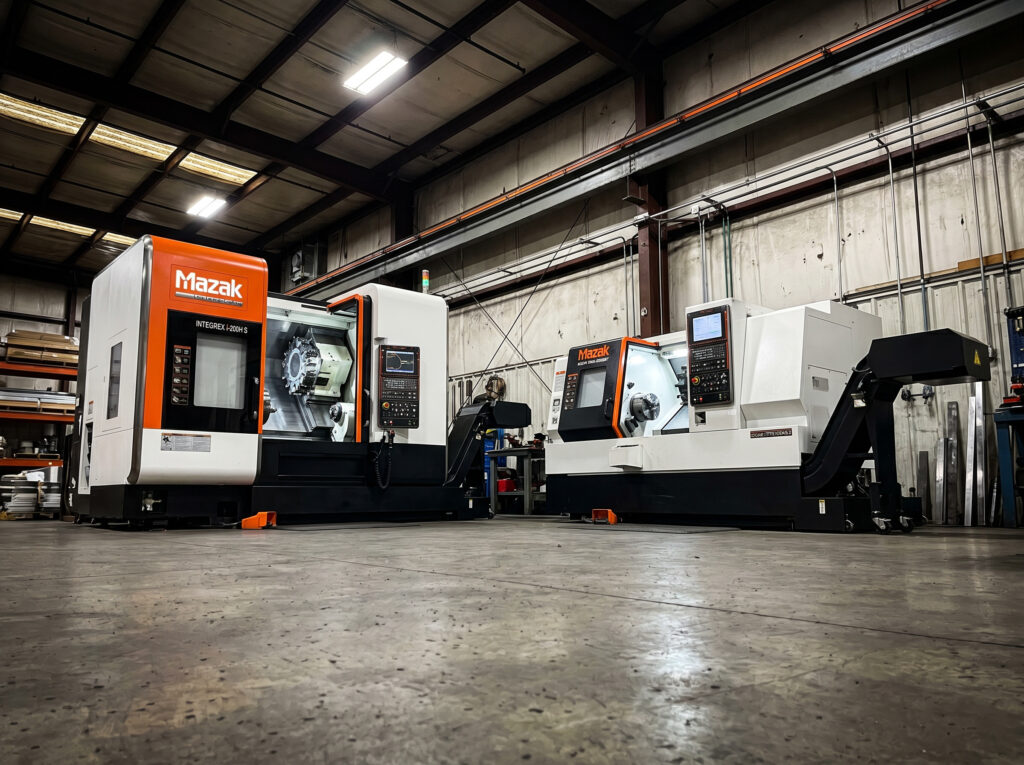

I talk with buyers who get stuck on this question: should we buy a Mazak Quick Turn or step into a used Mazak INTEGREX?
The tempting answer is to rank the machines. I do not think that helps. A Quick Turn and an INTEGREX are different answers to different production problems.
A Quick Turn is usually the cleaner answer when a shop needs turning capacity, familiar setup, and a faster path to making parts. An INTEGREX starts to make sense when the real cost is setup time, handoff between machines, complex part geometry, and work that would be better finished in fewer operations.
I am not a machinist. I work with machinists, shop owners, buyers, programmers, and production managers who are trying to make equipment decisions with real money on the line. For shops with 10 to 50 people, the right choice usually comes down to utilization, programming skill, tooling, floor space, and how fast the machine can turn into productive work.
Start with the bottleneck
Before comparing model names, decide what problem the machine has to solve.
If the shop is short on lathe capacity, behind on turned parts, or trying to replace an older turning center, a used CNC lathe such as a Mazak Quick Turn may be the practical move. The shop is buying spindle time, a known workflow, and a machine category that most turning departments understand.
If the problem is too many setups, work waiting between lathe and mill, tolerance stack-up, or complex parts that touch several machines before they ship, the INTEGREX conversation is different. In that case, the shop is buying process control as much as cutting capacity.
Mazak’s job shop application page talks about lower cost, shorter delivery times, fewer man-hours, and machines matched to workpiece needs. That is the right frame. Do not ask which machine is more impressive. Ask which one removes the constraint in your shop.
Where a Quick Turn usually fits
The Quick Turn family is built around CNC turning. Depending on the exact model, a used Quick Turn may be a basic two-axis lathe or a more capable machine with live tooling, Y-axis, sub-spindle, bar-feed compatibility, tailstock, different chuck sizes, and different control generations.
That variation matters. A buyer should not treat every Quick Turn as the same asset. A simple turning center and a Y-axis sub-spindle machine solve different problems.
For a smaller or mid-size shop, the appeal is usually straightforward. The machine can support shafts, bushings, fittings, pins, housings, sleeves, flanges, and similar work where turning is the main operation. If the right configuration includes live tooling, it may also handle drilling or light milling features without sending the part to another machine.
This is where discipline matters. If 80 percent of the work is turning, and the remaining work only needs modest secondary operations, a properly equipped Quick Turn may be enough. Paying for capability that will sit idle can hurt cash flow. That money may be better used on tooling, workholding, inspection, or another machine.
Where an INTEGREX usually fits
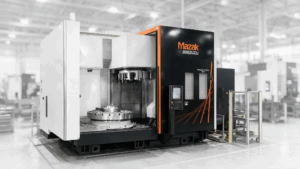
INTEGREX machines are built for multi-tasking. In broad terms, they combine turning and milling, and depending on configuration, they may include B-axis work, Y-axis capability, second spindle work, larger tool capacity, and more single-setup machining.
Mazak’s mass production application material describes the INTEGREX i-H series as a simultaneous 5-axis horizontal multi-tasking machine capable of turning, 5-axis machining, Y-axis machining, B-axis machining, and process integration. That is a serious capability set.
It also raises the bar for the buyer.
A used INTEGREX can make sense when a part currently moves from lathe to mill, then waits, then gets touched again, then goes back to inspection. Every handoff adds time and risk. If the INTEGREX can finish more of that part in one or two operations, the value may show up in labor savings, shorter lead time, better consistency, and less work in process.
Good INTEGREX candidates often include complex turned parts with milled features, tight relationships between turned and milled geometry, repeat jobs where setup time is hurting margin, and work that keeps losing time between departments.
The machine is not magic. The shop still needs programming, posts, tooling strategy, workholding, inspection discipline, and people who can think through the whole process. If the team is already stretched thin on programming or maintenance, include that in the buying decision.
Mazak’s NEO Series article gives useful context on newer INTEGREX development, but used buyers still need to evaluate the specific machine in front of them. Year, control, spindle condition, options, accessories, and service history can change the whole deal.
Cost is more than the price tag
Purchase price matters, but the better number is total cost to get productive.
For a Quick Turn, the budget usually includes the machine, chucks, tooling, workholding, chip handling, bar feeder if needed, utilities, rigging, freight, and operator time to get jobs running.
For an INTEGREX, the project may also require advanced tooling, milling spindle tooling, CAM or postprocessor work, prove-out time, training, more complex workholding, and a stronger inspection plan for parts coming off complete.
That should not scare a buyer away from INTEGREX. It should make the buyer honest. If the machine saves hours of setup and handling on repeat work, the added cost may be easy to justify. If the shop mostly runs simple turning work, that same cost may sit there doing nothing.
The used-machine checklist I would use
If a shop called Premier and asked which way to go, I would start with the work, not the model.
First, list the jobs expected to run in the next six to twelve months. A Quick Turn is usually safer when there is known turning work ready to load. An INTEGREX becomes more attractive when the routing itself is the problem.
Second, count setups. A part with a short cycle time can still lose money if it waits between three machines. A Quick Turn may have a lower hourly burden and be faster to absorb. An INTEGREX may reduce the whole route. The winner depends on the total path from raw material to finished part.
Third, be blunt about programming. A shop can buy machine capability faster than it can build the people and process to use it. If there is no programming plan, the INTEGREX may disappoint. If the skill is already there, or the shop is committed to building it, the machine can open new work.
Fourth, price the tooling and workholding before committing. Ask what comes with the machine, what condition it is in, and what still has to be purchased. This is especially important on INTEGREX machines because the tooling strategy is part of the value.
Fifth, verify the machine details. Model, year, control, spindle configuration, hours when available, visible condition, maintenance records when available, included accessories, voltage, manuals, and available options all matter. Two machines with the same badge can be very different purchases.
When I would lean Quick Turn
I would lean toward a Quick Turn when the shop needs dependable turning capacity and wants a clean path to return on investment.
If operators are already comfortable with CNC lathes, the parts are mostly turned components, and there is enough work to keep the spindle busy, a Quick Turn is often the practical decision. It can also be a better first Mazak purchase for a smaller shop because it does not force a major process change.
A more capable Quick Turn with live tooling, Y-axis, or sub-spindle may still reduce secondary work without pushing the shop into full INTEGREX complexity.
The question I keep coming back to is simple: will this machine make chips on paying work quickly? If yes, do not let spec-sheet envy push the shop into a machine that needs more programming, tooling, and support than the work requires.
When I would lean INTEGREX
I would lean toward a used INTEGREX when setup reduction is the business case.
If the machine can replace multiple operations, reduce operator touches, improve consistency, shorten lead time, and help the shop quote work it is currently passing on, the higher investment may make sense.
I would also look harder at INTEGREX when floor space and labor are tight. One multi-tasking machine that completes a family of parts may be more valuable than adding another lathe and another mill, provided the team can support it.
I would not buy an INTEGREX because it looks good on a spec sheet. Impressive machines still need utilization.
How I would make the call
A Quick Turn is usually the cleaner call when the shop needs turning capacity, simpler adoption, and a faster path to productive spindle time.
An INTEGREX is the better conversation when setup reduction, part complexity, and process consolidation create enough value to justify the extra cost, training, tooling, and maintenance.
Then verify the used machine itself. Premier lists equipment based on current inventory, and that inventory changes. Buyers should confirm specifications, condition, included items, pricing, availability, and shipping details before making a decision.
If you are comparing used Mazak lathes, call Premier Equipment at [(407) 786-2000](tel:4077862000) or email [quotes@premierequipment.com](mailto:quotes@premierequipment.com). We can talk through current Mazak inventory and compare the machine against the work you are trying to run.
Frequently Asked Questions
Is a Mazak Quick Turn better than an INTEGREX for a small shop?
A Mazak Quick Turn is often the better fit when a smaller shop mainly needs turning capacity. It is usually easier to absorb, easier to keep busy on straightforward lathe work, and less likely to force a major process change. A used INTEGREX can still make sense when setup reduction and complex parts justify the added programming, tooling, training, and maintenance.
When is a used Mazak INTEGREX worth the extra cost?
A used Mazak INTEGREX is worth considering when it can reduce multiple setups, combine turning and milling, improve part consistency, and shorten total lead time. The savings need to be real enough to justify the higher purchase price plus tooling, CAM/post work, operator training, prove-out time, and maintenance planning.
What should I check before buying a used Mazak lathe?
Check the exact model, control, spindle configuration, turret, live tooling, Y-axis, sub-spindle, tailstock, bar-feed compatibility, chip conveyor, machine condition, hours when available, included tooling, available service history, manuals, voltage, and whether the machine matches your real job mix. Premier’s used multitasking CNC machines buyer’s guide is a useful next read.
Sources
- Premier Equipment Mazak Quick Turn inventory
- Premier Equipment Mazak INTEGREX inventory
- Premier Equipment Mazak inventory
- Premier Equipment used CNC lathes
- Premier Equipment used multitasking CNC machines buyer’s guide
- Mazak job shop industry products
- Mazak mass production industry products
- Mazak NEO Series article