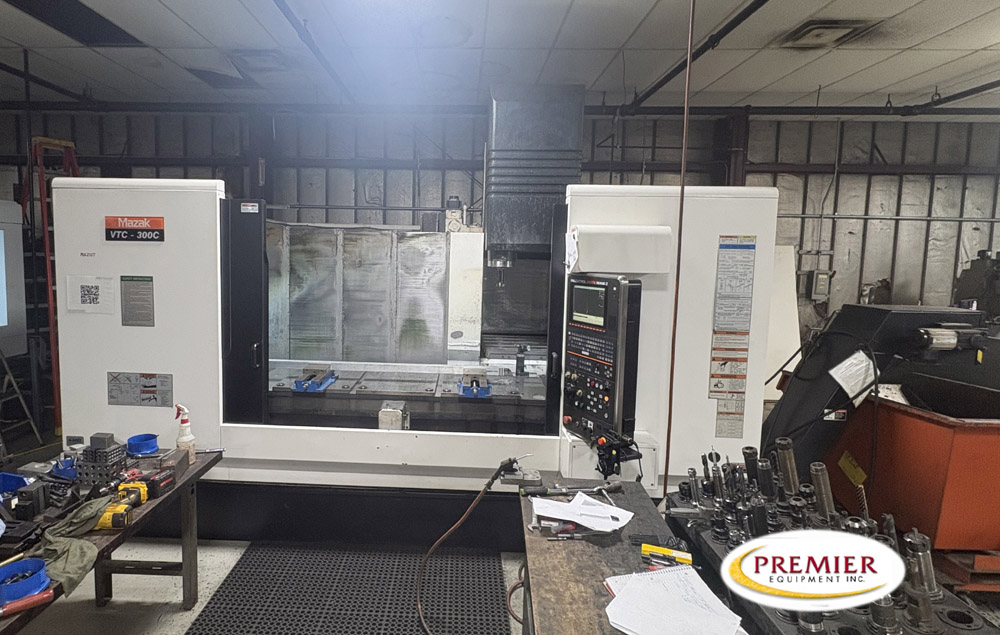

A long table gives a shop room to work. How you use that room can change which machine is worth buying.
For a shop comparing used Mazak machines, a traveling-column VTC raises a useful question: do you need one uninterrupted setup for a long component, or separate work zones for repeat parts? Both can justify the purchase. They make different demands on fixtures, loading time and the equipment fitted to the machine.
Do not buy a VTC assuming you can switch between those jobs without cost or preparation. Build the purchase around the work that will occupy it most often.
One long setup and two loading stations are different purchases
Mazak’s VTC product information describes a fixed table with a traveling cutting system. The table can accommodate long workpieces or multiple setups. On the specifically referenced VTC-530/20, Mazak describes an optional center partition that permits setup and loading on one side while machining takes place on the other.
That is the basis for alternating-zone work, sometimes called pendulum machining. It is not evidence that every older VTC has the same arrangement.
For long components, the buying priority is usable space across the setup. For alternating work, it is usable space within each approved zone, plus an operator routine that keeps the next fixture ready. A long table by itself does not prove either fit.
Mazak also describes long-workpiece and multiple-setup uses on its current VTC-Ez machines. That supports the production concept, not a retrofit promise for an older VTC-200 or VTC-300. Treat each model, generation and installed option package separately.
When the long component should decide the purchase
Take a hypothetical shop making long mounting rails. The important features are holes and milled surfaces spread along the rail. Keeping that work in one fixture may avoid a second locating operation, provided the machine can reach every required feature.
Start the layout with the rail, supports and clamps drawn together. Then add the cutter and holder at their most difficult approach. A rail can sit comfortably on the table while a hole near its end falls outside usable travel. Tall clamps can create another problem before the spindle ever reaches the material.
The buyer needs to review the complete setup drawing rather than table length alone. Workpiece weight, fixture weight, load distribution and the machine’s documented limits belong in that drawing review.
If long work pays the bills most weeks, buy for that arrangement first. A divider option has limited value if it repeatedly gets in the way of the production schedule. Any conversion between operating arrangements needs the machine’s approved procedure; removing a partition is not a casual setup shortcut.
When alternating zones can earn their space
Now consider a hypothetical repeat bracket job. One fixture holds the part being machined. Another holds the next blank in a separately protected loading zone, on a machine approved for that operation.
The opportunity is to do some handling during cutting time rather than waiting until the spindle stops. But the operator still has work to do. Unclamping, clearing chips, seating the blank and clamping it correctly must fit the available time.
Compare the loading routine with the cutting cycle
If machining takes longer than the next station’s preparation, the operator may have the next part ready before the machine changes zones. If preparation takes longer, the spindle still waits. A divider cannot remove that mismatch.
Time the complete routine on representative work. Include the awkward blank, the chip that prevents seating and the required measurement. Planning around the easiest cycle creates a purchase case that may not survive a normal shift.
A shop with very short cutting cycles may get more value from a different fixture or loading method than from extra table length. Compare that option with other used CNC vertical machining centers before paying for a layout your operator cannot keep supplied.
Shared tools can help, but mixed jobs add work
Two fixtures for the same part can share a common tool plan. Two unrelated jobs may need different cutters, offsets and tool lengths. Tool-magazine capacity then becomes part of the production decision.
Keeping different jobs mounted sounds convenient until every change requires replacing tools and proving out another program. The useful comparison is time to produce acceptable parts across the planned batch, including the changeover.
Budget for the arrangement you intend to run
A machine quote and a ready-to-run production arrangement are different things. Alternating fixtures can require additional workholding. Long rails may need dedicated supports. Either arrangement can need holders that are absent from the sale.
Price that work before comparing purchases. Premier’s used CNC financing options can be part of the funding conversation, subject to approval and terms, but the production budget still needs to account for tooling, installation and prove-out.
Premier sold new Mazak machines from 1988 to 2015. That background is useful when discussing what a used machine needs to do, but the application still decides the answer. Send the part drawing, proposed fixture arrangement and expected batch pattern when you talk with Premier Equipment.
For long work, lead with the complete setup envelope. For repeat work, lead with the loading routine and cycle. Those details make the comparison more useful than asking for the biggest VTC available.
Frequently asked questions
Does every used Mazak VTC have a table divider?
No. Mazak identifies the center partition as an option on the referenced VTC-530/20. A used machine needs its own configuration confirmation. A partition, guarding, interlocks and permitted operating modes must support the intended loading arrangement. Never bypass a safety device to load beside active machining.
Is a divided VTC table the same as a pallet changer?
No. The divided arrangement uses work zones on a fixed table rather than automatically exchanging pallets. It can let loading overlap cutting on a properly equipped machine, but it does not provide a pallet pool or make the process unattended.
Should a shop choose long-part capacity or alternating work zones?
Choose around the recurring work that justifies the purchase. Long components need usable travel and support across their full setup. Alternating work needs enough space within each zone and a loading routine that keeps pace with cutting. If both are required, confirm the approved changeover procedure and include that time in the production plan.