
A used machining center with a higher maximum spindle speed is not automatically the better cutting machine. If the job calls for a large cutter at a modest speed, the important number is available torque at that speed. A small finishing tool working at high surface speed asks a different question.
The useful way to compare CNC spindle torque vs RPM is to put your actual operations on the spindle’s power and torque curves. Then compare the duty ratings, not just the largest numbers in the listing. That approach can keep a shop from buying speed it rarely uses or overlooking a spindle that fits its hardest recurring cut.
Start with the work you intend to keep on this machine. The buying decision belongs to that work, not to the most impressive brochure specification.
Torque, speed, and power describe the same spindle differently
Torque is the twisting effort available at the spindle. RPM describes rotational speed. Power combines the two. A horsepower figure without its speed and duty rating leaves out information you need to judge a cut.
Machine builder Kimla explains the relationship between spindle power, torque, and speed: when torque stays constant and speed decreases, available power decreases with it. Its guide also explains why gearing changes the comparison with a conventional milling machine. The useful lesson is the relationship, not a universal cutter-size recommendation for every machining center.
A hypothetical calculation makes the point. If a spindle actually delivers 20 horsepower at 1,500 RPM, torque is approximately 70 pound-feet. If it delivers the same 20 horsepower at 6,000 RPM, torque is approximately 17.5 pound-feet. These figures use torque in pound-feet = horsepower × 5,252 ÷ RPM.
That example does not mean a machine advertised at 20 horsepower produces 70 pound-feet at 1,500 RPM. It does so only if 20 horsepower is available there. The curve must establish that first. Dividing the headline horsepower by your desired cutting speed can produce a convincing answer that the spindle cannot deliver.
Read the curve where the tool will run
Many spindle drives have a region where torque is roughly constant and power increases with speed. Above the base speed, a constant-power region may follow, with torque declining as speed rises. Actual behavior depends on the motor, drive, gearing, cooling, and operating limits. Some machines have multiple gear ranges and different curves for each.
Your comparison should begin at the intended cutting speed. Find that point on the horizontal axis, then read both the power and torque available under the applicable duty rating. Repeat for the other operations that matter to the purchase.
A shop doing substantial face milling may care about a lower-speed section of the curve. A shop cutting small features with small-diameter tools may spend more time near its upper end. Neither section tells you everything about the other.
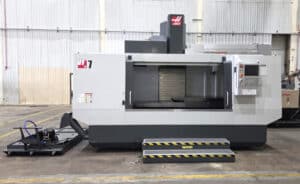
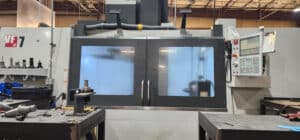
When browsing used CNC vertical machining centers, treat maximum RPM as a boundary, not a ranking. Two machines with similar maximum speeds can have very different useful cutting ranges. Two with different maximum speeds may perform similarly where your roughing tool actually runs.
Duty ratings matter when the cut stays loaded
A short peak rating and a continuous rating are not interchangeable. A brief heavy engagement followed by lighter work presents a different thermal demand from sustained roughing. A spindle can have an attractive maximum rating without being intended to hold that output throughout a long operation.
OEM specifications demonstrate why the labels matter. FERMAT’s WFT 13/15 specifications publish separate power and torque values under S1/S6 and S1/S3 duty headings, depending on the listed control configuration. This is a boring-mill example, not a specification for the vertical mill you are considering. It shows why a single unlabeled number is an incomplete comparison.
S1 denotes continuous duty. Other duty designations describe operating patterns rather than permission to use the largest number indefinitely. Read the manufacturer’s definition, including load duration and any required reduced-load or rest intervals. Do not assign a universal duration to a rating just because another builder uses similar terminology.
For a used machine, obtain the curve for its installed spindle and drive configuration. A current brochure for a similarly named model may describe a different option or generation. If the correct curve cannot be established, leave the uncertainty in the buying decision rather than filling it with a newer machine’s specifications.
Material matters, but cutter diameter changes the question
“Mostly steel” is a useful starting point, not a spindle specification. Alloy, hardness, tooling, engagement, and the desired surface speed all affect the demand. Roughing a steel block with a large indexable cutter is not the same operation as finishing a small feature in that block.
At a given cutting surface speed, a larger cutter turns more slowly than a smaller cutter. That can move the demanding operation into a part of the curve where the advertised horsepower is unavailable. Large drills and taps can create similar reasons to look below the spindle’s headline speed range.
Aluminum does not automatically mean the fastest spindle wins, either. A large-diameter cutter, heavy engagement, or a less rigid part can make another limitation more important. Small aluminum tools may benefit from access to higher speed, but holder ratings, balance, tool geometry, and the application still set limits.
The same reasoning extends to turning, although the rotating diameter is usually the workpiece rather than the milling cutter. Buyers comparing used CNC lathes should distinguish main-spindle demand from live-tool demand. Those are different drives, and a strong main-spindle rating says little about milling capability at a driven tool station.
Toolpath choice can move the requirement
A toolpath with lighter radial engagement can change the load compared with a full-width cut. Different cutter sizes and engagement strategies may move useful work into another speed range. That is a process choice to evaluate, not a reason to ignore torque.
Look at the demanding portions of the program, including entry moves, corners, slotting, and drilling. A comfortable average load can hide a short section that dictates the practical operating limit. Conversely, one occasional heavy operation should not automatically dictate the spindle for an entire mixed workload if a sound alternate process exists.
The useful buyer discussion is specific: which operation requires which speed, how long does it remain loaded, and can the tooling strategy change without compromising the part? A tooling supplier or applications engineer can help establish the cutting requirement. The machine’s OEM data establishes the available output.
Keep those two sources of information separate. A recommended cutting parameter is not proof that a particular used spindle can sustain it.
Torque is only one limit on the cut
Even adequate torque does not establish that the machine will hold the desired cut. Tool overhang, spindle interface, workholding, machine structure, and part rigidity can limit the process before motor output does. Chatter is not automatically a horsepower shortage.
Cooling and chip evacuation also affect whether a proposed operation is practical. More power does not correct recutting chips or a cutter that cannot evacuate material from a deep feature. Nor does a larger taper, by itself, establish the available torque at a particular speed.
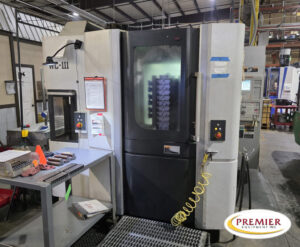
If the buying decision includes orientation, setup access, or palletized work, compare the application with used horizontal machining centers as well. Choose the machine architecture for the process, then evaluate its actual spindle option. “Horizontal” and “vertical” are not substitutes for power curves.
Premier’s broader guide to choosing the right CNC mill for your shop covers the surrounding machine choice. Here, the narrower decision is whether the spindle’s usable output matches your cutting range.
Make the buying conversation about the recurring cut
Bring a representative part family into the discussion, along with the material, important cutter diameters, intended speeds, and the operations that stay heavily loaded. Include finishing work if it drives the need for higher speed. A shortlist built only around the toughest roughing operation can be just as unbalanced as one built around maximum RPM.
Then compare machines against that operating range. A lower-speed spindle with suitable continuous torque may belong on the shortlist. A higher-speed option may be justified when the recurring tools actually need it. A mixed workload may call for a compromise, or for keeping a specialized operation on another machine.
Ask Premier to help narrow the available configurations around those requirements. The objective is a defensible match between the spindle and the work, with unresolved specifications identified before a purchase decision. It is not a promise that the largest torque number or fastest spindle will produce the best result.
Frequently asked questions
Is higher spindle RPM better for a used CNC mill?
Only when the tools and operations need that speed. Maximum RPM does not establish torque at a lower cutting speed, continuous output, or the rigidity needed for the cut. Compare the machine at the speeds your recurring work will actually use.
Can I calculate torque from the advertised horsepower?
Only if that horsepower is available at the speed and duty rating in question. The formula relates torque, power, and RPM at the same operating point. Using peak horsepower at an unrelated low speed can greatly overstate available torque.
Does steel machining always require a geared spindle?
No. The decision depends on cutter diameter, material condition, engagement, and the required output at the chosen speed. Gearing can support a useful lower-speed torque range, but the actual curve and application matter more than a general rule about steel.
Which rating matters for long roughing cycles?
Start with continuous-duty capability and compare it with the actual load pattern. A short-duration rating may describe a useful capability, but it is not a substitute for sustained output. Have the OEM or applications specialist interpret ambiguous duty labels for the exact spindle configuration.