
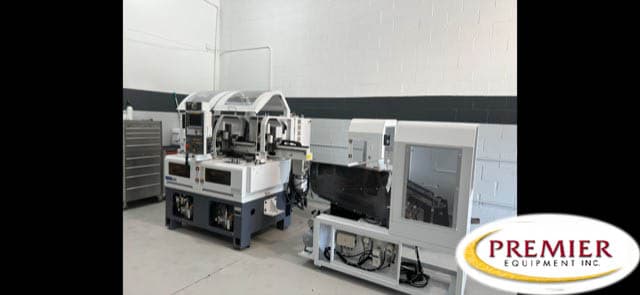
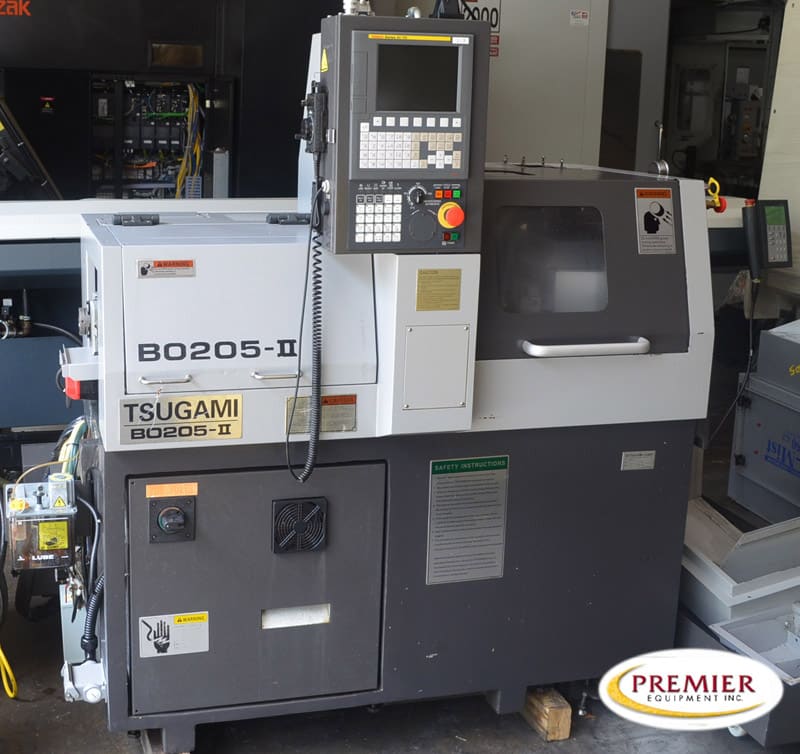

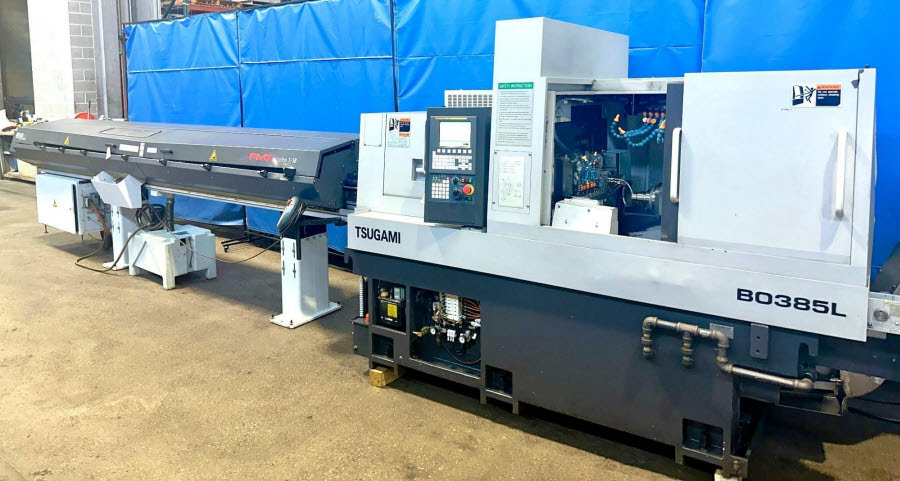
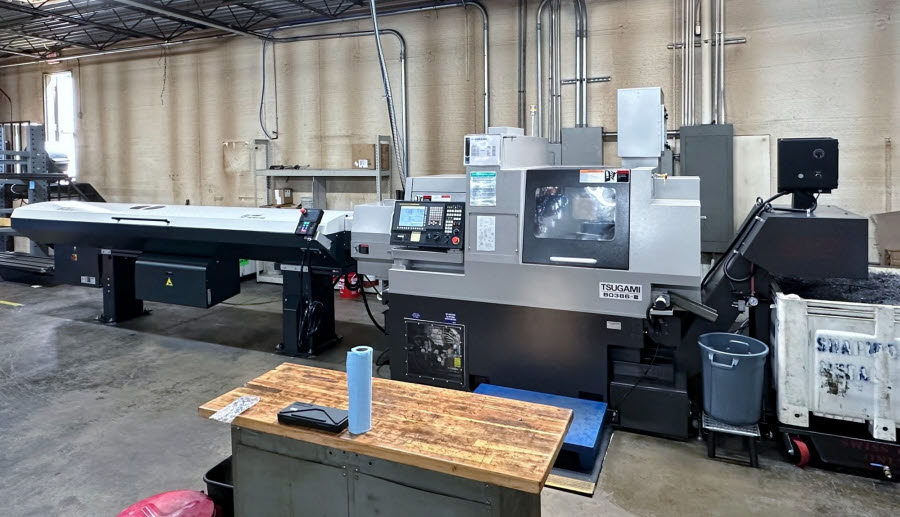
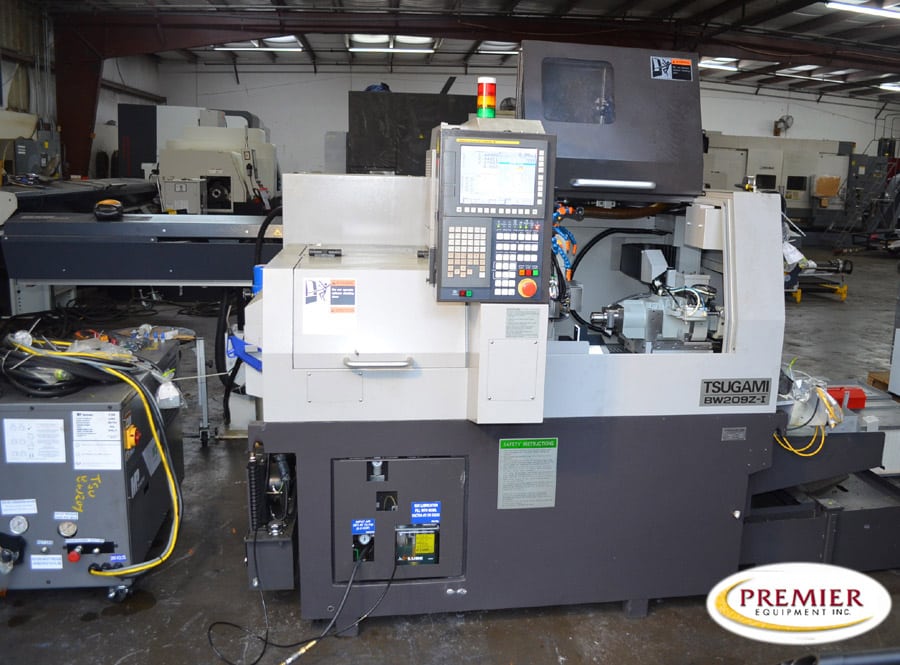
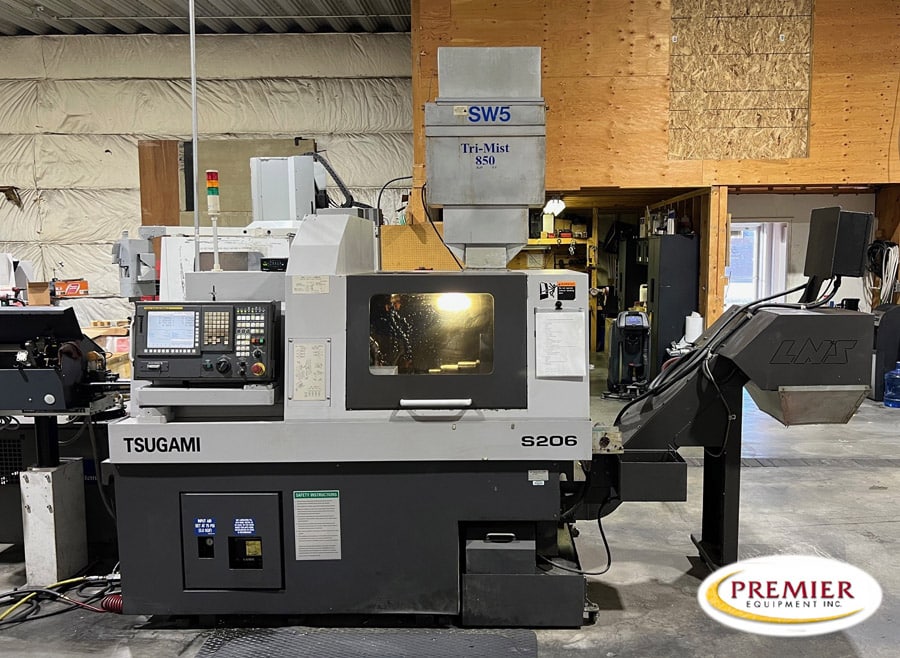
What Is a Swiss Type Lathe?
Unlike a standard CNC lathe, a Swiss lathe moves the tools while the part remains stationary. Rather, while the tools are cutting, the bar stock is fed through a guide nut. Because it supports the material exactly where it comes into contact with the lathe, the guide nut is essential. Swiss lathes can maintain tight tolerances on long, thin parts that conventional machines might bend or vibrate due to their design. The majority of Swiss lathes are well-suited for creating tiny, precise parts like screws, fittings, and medical parts because they can handle bar stock with diameters up to 32 or 38 mm. A standard turning center is usually more efficient for larger items.Swiss Lathe Brands We Carry
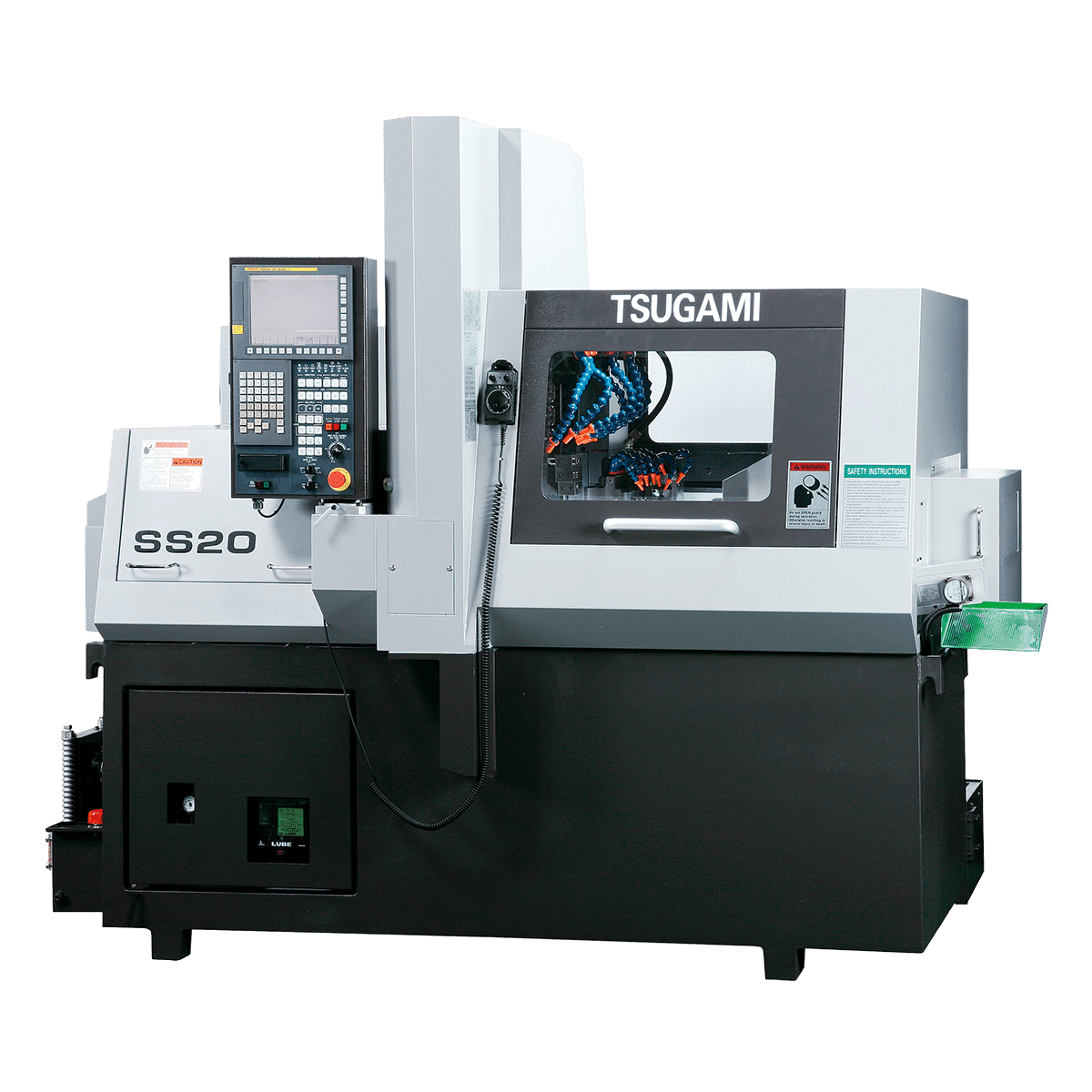
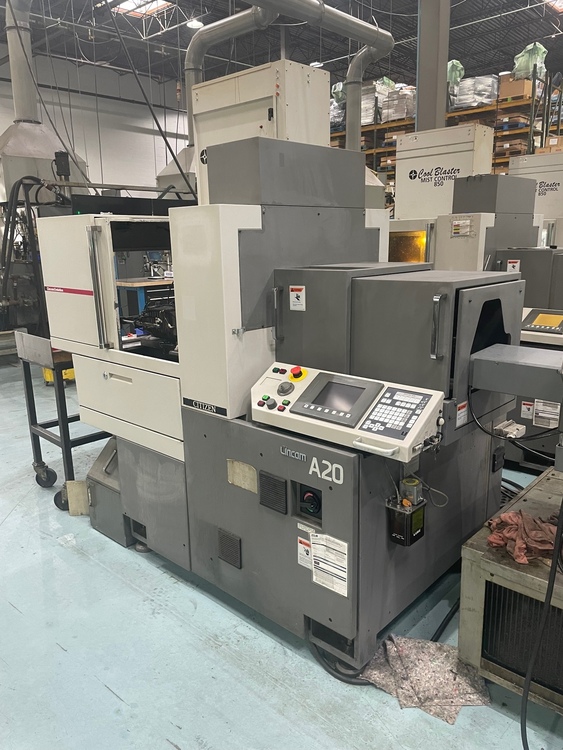
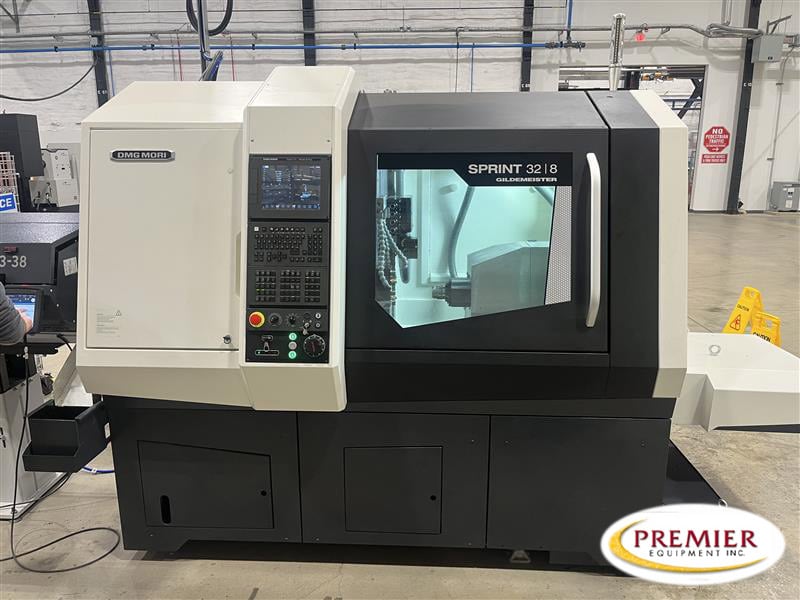
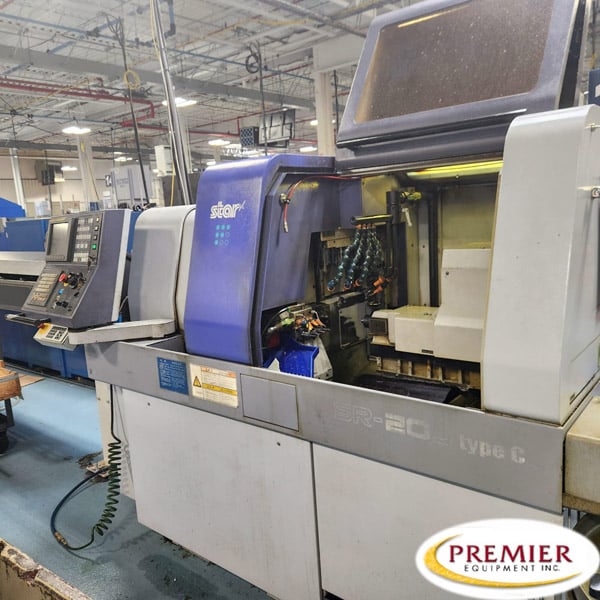
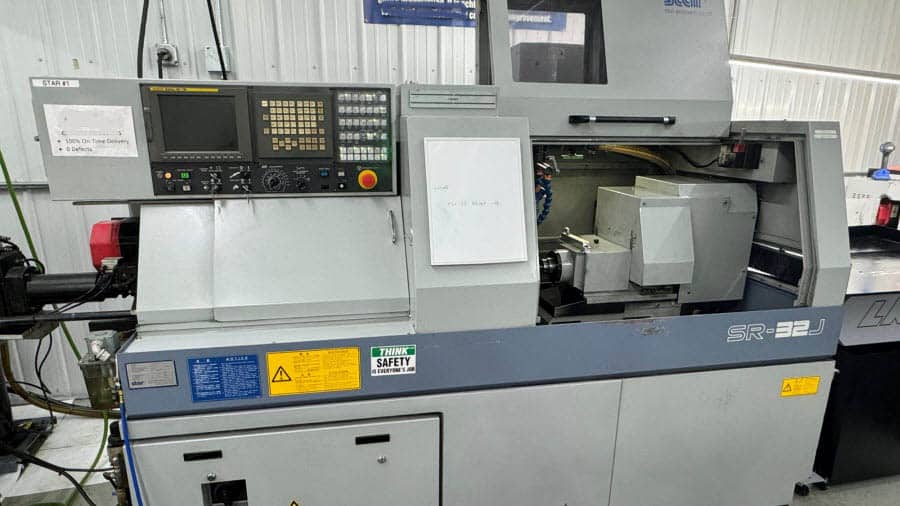
The most popular Swiss lathe brand available is Citizen; they have been creating Swiss-style machinery for many years, and parts are readily available. The majority of precision shops use the SR series (SR-20, SR-32, and SR-38) of Japanese-built Star machines with Fanuc controls. Another excellent choice is Tsugami, particularly for businesses doing work with very small diameters (less than 20 mm). DMG Mori's Sprint series manages Swiss-type work with multi-axis options that handle complex geometry in a single setup for shops seeking greater axis capability. When available, Ganesh and Eurotech complete our inventory. Every brand has its own peculiarities; give us a call to find out which ones are simpler to maintain.| Brand | Series / Model | Max Bar Capacity | Origin |
|---|---|---|---|
| Citizen | Cincom L12, Cincom L20, Cincom M32, Cincom A32 | 12mm, 20mm, 32mm, 32mm | Japan |
| Tsugami | B012, B205, B376, S205 | 12mm, 20mm, 38mm, 20mm | Japan |
| Star Micronics | SR-20, SB-16, SW-20, SV-32 | 20mm, 16mm, 20mm, 32mm | Japan |
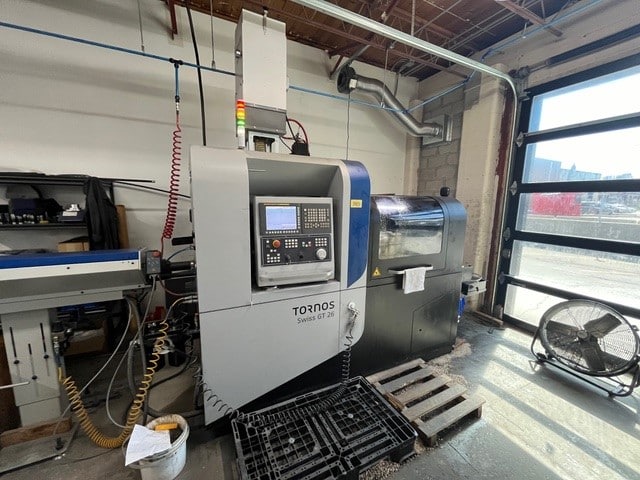
| Tornos | SwissNano 4, Deco 10, Deco 13, MultiSwiss 6x16 | 4mm, 10mm, 13mm, 16mm | Switzerland |
| Hanwha | XD12, XD20, XD32, XD38 | 12mm, 20mm, 32mm, 38mm | South Korea |
| Nomura | NN-20, NN-32 | 20mm, 32mm | Japan |
| Miyano (DMG Mori) | BNA-42, BNJ-34, ANX-42 | 42mm, 34mm, 42mm | Japan |
Swiss Lathe vs CNC Turning Center: Which Do You Need?
If your parts are complicated, less than 32 mm in diameter, and you will be making a lot of them, a Swiss lathe is probably the best tool for the job. A standard turning center would not be able to handle length-to-diameter ratios that guide bushings can handle. However, Swiss lathes are harder to learn because the code is different, it takes longer to set them up, and they need workers with a lot of experience. A regular CNC turning center is better for parts that are bigger than 32 mm or smaller quantities. It will also cost less. Not sure which one will work best for your store? When you call us at 407-786-2000, we'll talk about what you're making.What to Check When Buying a Used Swiss Lathe
The condition of the guide bushings should be your first priority. The precision benefit that makes Swiss lathes desirable to purchase is lost if they are worn out. The bearings of the main spindle and the sub-spindle should be inspected. Determine if the bar feeder is included. What brand is it, if any? What diameters is it capable of handling? Ensure that the parts for an older machine's control are not nearing the end of life. While some older private controls on machines manufactured before 2000 can be expensive to repair, Fanuc 18i and 21i controls function flawlessly. Check the completion of a test section after the machine has completed its program cycle, if possible. Before putting any machine on the floor, we inspect it, and we are pleased to share our findings with you.Financing a Used Swiss Lathe
A more modern multi-axis Star or DMG Mori Sprint can cost up to $80,000, while an older Citizen or Tsugami can be bought for roughly $15,000. With our partners, we offer authorized credit financing up to $500K for terms ranging from one to six years. An affordable used Swiss lathe is better than paying for a new machine that will strain your finances. Call 407-786-2000 to talk about your options.Used Swiss Lathe Brands We Carry
| Brand | Origin | Known For | Common Bar Capacity | Control System |
|---|---|---|---|---|
| Citizen | Japan | High-speed precision, LFV chipbreaking technology | Up to 32mm | Citizen CINCOM |
| Tsugami | Japan | Rigid construction, wide model range, value | Up to 32mm | Fanuc 32i / Mitsubishi |
| Star | Japan | Swiss industry pioneer, high rigidity, long tool life | Up to 32mm | Fanuc / Star proprietary |
| Tornos | Switzerland | Swiss watchmaking heritage, ultra-precision | Up to 38mm | TB-DECO / Fanuc |
| Hanwha | South Korea | Aggressive pricing, solid performance, growing US presence | Up to 32mm | Fanuc |