
A used lathe can have a spindle bore larger than the bar it is rated to feed. If you buy from the bore dimension alone, you can end up with a machine that will not run the stock your job requires.
For bar-fed work, start with the machine’s stated bar capacity and the equipment installed on that particular lathe. Chuck size answers a different question. So does maximum turning diameter.
When comparing used CNC lathes, decide how the raw material will enter the machine before deciding how large a lathe to buy.
Three dimensions that should not be treated as one
The spindle bore is the opening through the spindle. The usable path for bar stock also depends on the components installed through and around that opening, including the drawtube and workholding. A bare-spindle dimension does not describe the complete feeding path.
Bar capacity is the builder’s stated stock-diameter capacity for the specified configuration. That is the relevant starting point when you intend to feed material through the headstock. A used machine’s installed chuck, collet system or other equipment still needs to match the proposed stock and process.
Chuck size describes the chuck body, not the diameter of bar that can pass through it. An 8-inch-class chuck does not make a lathe an 8-inch bar machine. Nor does it establish the largest finished part the machine can cut.
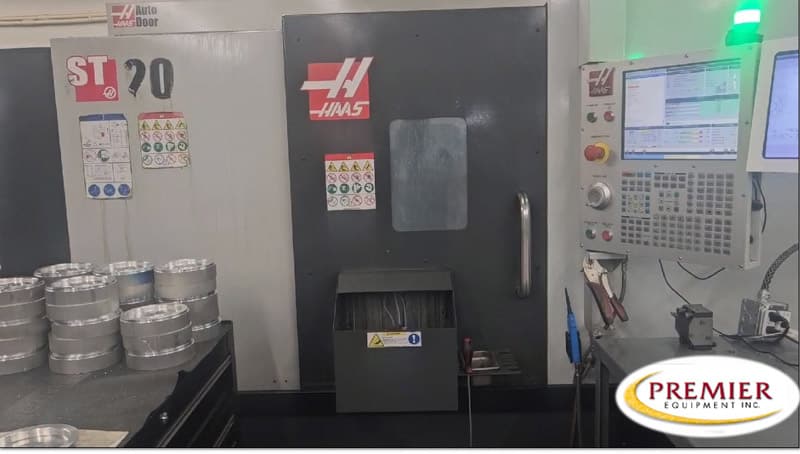
The current Haas ST-20 specifications make the distinction clear. Haas lists an 8.3-inch chuck, 2.50-inch bar capacity and a 3.50-inch spindle bore. Those numbers belong to different parts of the same specification sheet.
The 3.50-inch bore is not permission to feed 3-inch bar through that listed configuration. Use the published bar capacity for that decision. These are current OEM figures, not specifications for every used ST-20 built over the years.
Start with the stock you will buy, not the finished diameter
Consider a hypothetical repeat part that finishes below the lathe’s stated bar capacity, but must start from stock above it. The finished drawing may look like a fit. The raw bar still has to enter the machine before any material comes off.
If the job depends on feeding that stock, look for a machine with suitable bar capacity. Fitting a larger chuck to the original machine will not enlarge the rest of the through-spindle path.
There may be another route. The shop could saw the stock into blanks and load them from the front. A blank does not need to pass through the headstock when the whole blank remains in front of it. The chuck and jaws must grip it properly, and the machine must have the cutting capacity and clearance for the complete setup.
That makes the lathe a candidate for a different process, not an approved fit. Gripping length, tool access and the operations left after the first setup still need application review.
More bar capacity or more handling?
Loading blanks can keep a smaller bar-capacity lathe in the discussion. It also moves work elsewhere. Someone has to prepare the blanks and load them, or the shop needs a suitable loading system. The route may leave a second operation to finish the gripping end.
For an occasional larger-diameter job, the extra handling may be acceptable. If the machine is being bought to feed the same stock day after day, loading blanks may defeat the purpose. Compare those two routes before assuming the smaller machine will cost less to put to work.
If the second end is the main difficulty, the sub-spindle versus tailstock decision deserves its own look. A sub-spindle may help with second-end work, but it does not increase the main spindle’s bar capacity.
The useful question is whether more through-bar capacity removes work from the route you intend to run. Buying a larger machine for a diameter that will always be front-loaded may solve the wrong problem.
A bar feeder has its own limits
A feeder that accepts your stock does not prove the lathe will accept it. The lathe and feeder need to work together, and the smaller relevant capacity still applies.
PRO Machinery’s bar-feeder selection guidance identifies bar dimensions and compatibility with the lathe’s spindle, chuck and control interface as separate considerations. Treat those as package requirements. A feeder model name or a photograph beside a lathe does not establish the installed interface or what comes with the sale.
Keep the loading method in that conversation too. Bar length and stock shape can change the feeder requirements. Do not assume that a setup suitable for one round-bar job suits every diameter or profile your shop buys.
When you talk with Premier Equipment, bring the raw stock dimensions and explain whether you want to feed bar or load blanks. Tell us which work repeats and which larger parts are occasional. That gives us a more useful starting point than chuck size alone. You can also call (407) 786-2000 to discuss the application.
Frequently asked questions
Is spindle bore the same as bar capacity?
No. Spindle bore describes the spindle opening. Bar capacity describes the builder’s stated stock capacity for a specified configuration. Installed components can reduce the usable passage, so the bore figure alone does not establish what bar the lathe can feed.
Can a CNC lathe turn a part larger than its bar capacity?
It may be able to when the stock is loaded from the front rather than passed through the headstock. The complete setup must still satisfy the machine’s cutting envelope and workholding requirements. Bar capacity is not a substitute for maximum turning diameter, and neither figure alone approves the job.
Does adding a larger chuck increase bar capacity?
Not by itself. The through-spindle path includes more than the chuck. A chuck change must be compatible with the machine and the rest of its workholding system; it cannot be assumed to enlarge the usable bar passage. Establish the exact configuration before buying around a proposed capacity increase.