
The machine payment can arrive before the customer payment. That is the cash-flow problem to solve when a new contract justifies buying a CNC. A profitable quote and a signed purchase order do not put money in the bank on the date payroll clears.
For CNC machine financing, cash flow needs a calendar. Put the equipment funding date beside the first loan payment, then follow the customer’s work through shipment, acceptance, invoicing and collection. The lowest balance between those dates can matter more than the balance at month-end.
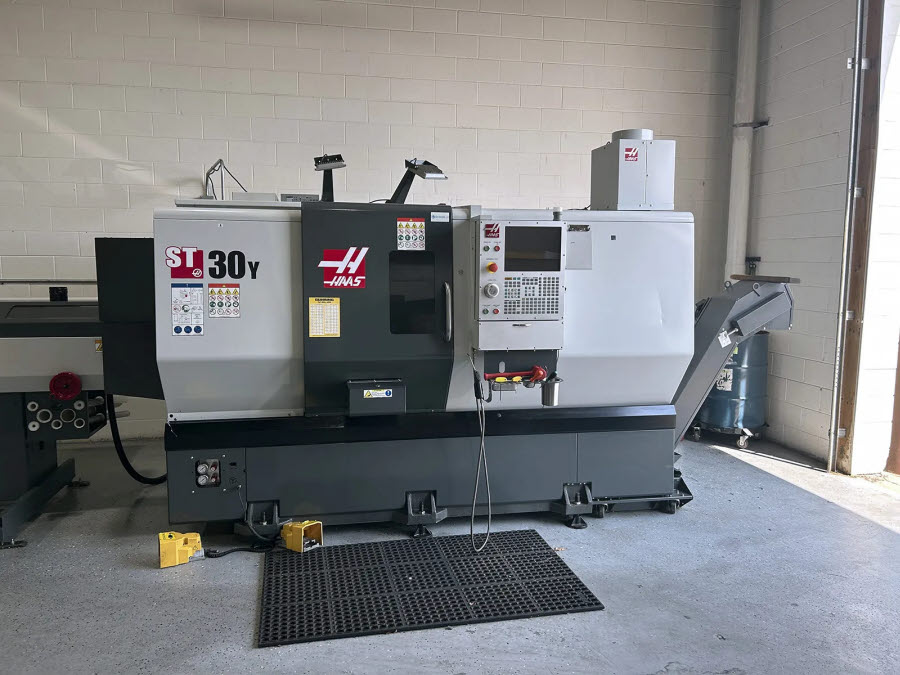
Start with a machine that fits the work. Premier’s used CNC inventory is the commercial starting point; the cash forecast answers a separate question: can the shop carry the commitment until customers actually pay?
Find the event that starts the customer’s payment clock
A purchase order may say net 30 without making the starting event obvious. Payment could run from a valid invoice, delivery, acceptance or another agreed milestone. Read the contract and confirm the process with the customer’s purchasing and accounts-payable contacts.
A completed part may still need inspection records or customer approval before an invoice becomes payable. If the customer rejects an incomplete submission, the expected collection date can move even though machining finished on time. Assign someone to own that paperwork and confirm receipt.
The SBA’s financial-management guidance distinguishes accrual recording from cash received and recommends managing receivables, payables and available cash. For a shop owner, the practical point is straightforward: a sale recorded this month may fund a payment next month. Your CPA should determine the proper accounting treatment; your forecast still needs the actual collection date.
A hypothetical December cash bridge
The following example is entirely hypothetical. These are invented planning assumptions, not a Premier customer result, financing quote or current market terms. It isolates one purchase and job; the opening balance is cash available after reserving money for unrelated shop obligations.
Assume the shop starts December 1, 2026, with $60,000 available. It buys a $100,000 machine with $20,000 of its own cash and $80,000 paid directly to the seller by a lender. The assumed agreement calls for a $2,000 first payment on January 5, 2027. No interest rate or loan term is inferred from that payment.
A $50,000 customer order pays a $10,000 advance on December 8. Parts ship December 18, the customer accepts them December 22, and the shop issues the remaining $40,000 invoice that day. For this example, the agreed balance is collectible January 21, 2027, 30 calendar days after invoicing. All listed receipts are assumed to clear on the stated date.
| Date | Event | Cash in | Cash out | Available balance |
|---|---|---|---|---|
| December 1 | Opening available cash | Not applicable | Not applicable | $60,000 |
| December 2 | Machine down payment | $0 | $20,000 | $40,000 |
| December 4 | Lender pays seller $80,000; machine ships | $0 | $0 | $40,000 |
| December 8 | Customer advance clears | $10,000 | $0 | $50,000 |
| December 11 | Material and outside processing payments | $0 | $18,000 | $32,000 |
| December 18 | Parts ship; assigned labor and operating payments | $0 | $12,000 | $20,000 |
| December 22 | Customer acceptance and $40,000 invoice | $0 | $0 | $20,000 |
| January 5 | First equipment payment | $0 | $2,000 | $18,000 |
| January 12 | Further assigned operating payments | $0 | $8,000 | $10,000 |
| January 21 | Customer balance clears | $40,000 | $0 | $50,000 |
The shop reaches a $10,000 low balance before collection. If management requires a $15,000 minimum reserve for this plan, it has a $5,000 reserve shortfall even though the balance never becomes negative. January’s $50,000 ending balance would hide that earlier squeeze in a month-end-only forecast.
The reconciliation is $60,000 opening cash plus $50,000 customer receipts, less $60,000 of listed cash payments, leaving $50,000. The lender’s direct payment is recorded as equipment funding and debt, not spendable operating cash. The customer advance is part of the $50,000 order, not additional revenue. These balances are cash arithmetic, not a profit calculation.
Move collection two weeks and watch the low point
Now assume the customer pays on February 4 instead of January 21, a 14-day delay. Keep every earlier payment unchanged and add $8,000 of operating payments due January 26 in both scenarios.
With on-time collection, the January 26 balance is $42,000. With late collection, it is $2,000. The delayed case is $13,000 below the assumed $15,000 reserve, compared with the original $5,000 gap. Collection restores the balance to $42,000 on February 4, but the shop must survive the dates before that receipt.
There is no assumed overdraft, emergency loan or supplier extension in these numbers. A positive $2,000 balance is thin protection if another payment appears. Any borrowing used to cover the gap would bring its own availability conditions, fees and repayment obligations into the forecast.
Run an acceptance-delay case separately. If acceptance moves, determine whether the invoice date and contractual due date move with it. Do not count the same delay twice by shifting both dates independently without reference to the contract.
Change the payment arrangement before committing
The example’s reserve gap gives the owner something specific to discuss. An agreed larger customer advance, staged billing for accepted deliveries or a different supplier payment date could change the low point. Each requires the other party’s agreement. A hoped-for concession does not belong in the base forecast.
Ask the lender exactly what starts repayment. Confirm funding conditions, the first payment date, subsequent due dates and any payments or charges required at signing. Deferred payments, if offered, do not necessarily mean interest-free time. Obtain the complete written schedule and have the lender explain how deferral affects total repayment.
Premier’s used CNC financing page provides the application route and financing contact information. Bring the cash calendar to that discussion. Availability and final terms require lender review; a website description is not an approval for your business or your selected machine.
The SBA’s loan-program overview is a separate resource for discussing financing alternatives with participating lenders. Program eligibility and permitted uses vary. That resource does not establish that Premier offers an SBA program, that you qualify, or that an equipment loan will fund working capital.
Keep the forecast tied to the actual purchase
Use the selected machine’s written release and funding conditions. A forecast for a used vertical machining center should not assume it can ship on the same day as another listing. Confirm the dates before promising a customer production capacity.
Then put this job into the whole-shop forecast. The example reserved unrelated obligations outside its opening balance; your real model must include existing debt service, payroll, taxes and other committed payments without counting them twice. Review tax timing and accounting classifications with your CPA. Do not treat an anticipated deduction as cash available to make next week’s payment.
Questions about financing before collection
Can a profitable job still create a cash shortage?
Yes. Material, labor and debt payments can fall before customer collection. Profitability and the ability to meet a particular payment date are different tests.
Should the forecast use invoice dates or payment dates?
Keep both. Invoice dates explain the receivable; expected cleared-payment dates drive available cash. Use the contract and actual customer payment history to set a defensible expectation.
Does approval settle whether the shop can afford the purchase?
No. Review the lender’s schedule against your cash commitments and delayed-collection case. Approval does not eliminate customer-payment risk.
Contact Premier Equipment with the machine requirements and proposed purchase timing. Bring the customer collection dates to your lender and CPA as well. Agree on a workable cash reserve before committing to a payment schedule the customer may not fund on time.