
A full schedule does not tell you whether the shop needs another CNC machine. It may need more cutting hours. It may need an operator available when the current machine finishes. Or it may be losing the usable day to setups, material delays, and first-part decisions.
Those problems can look alike from the office. They call for different purchases on the floor.
Before choosing automation or another CNC machine, ask a narrower question: what is preventing the next acceptable part from leaving the constrained operation? Find that limit before comparing equipment. Another spindle addresses a machine-occupied problem. Part handling addresses a loading problem. Neither automatically fixes a setup or scheduling problem.
Separate machine time from operator time
A machine cycle and an operator’s work cycle are not the same thing. During automatic machining, the operator may be preparing stock, measuring a completed part, or tending another machine. Some of that work overlaps with cutting. Some stops the machine.
Record the sequence rather than adding every activity into one large total. Distinguish automatic machine occupancy, necessary load and unload time, waiting for an operator, setup time, and other stops. Keep tool changes and probing visible within machine occupancy even when they are not cutting metal.
The Lean Enterprise Institute’s standardized-work guidance describes a process capacity sheet using machine cycle times, tool setup and change intervals, and manual work times to identify bottlenecks. Its work combination table separates manual work, walking, and machine processing. That is a practical basis for this buying decision: study the interaction, not just the spindle-running percentage.
Choose a representative stretch of work, including the difficult changeovers. A smooth repeat job can hide the problem that consumes the rest of the week. Record accepted output as well as activity. Keeping a machine busy with rework does not establish capacity for customer demand.
When another machine is the more direct answer
The strongest case for another spindle is a queue of ready, necessary work waiting behind a machine that is already occupied with productive operations. Material, programs, fixtures, and people are available. The machine cannot process two independent jobs at once.
A loader does not shorten that occupied cutting time by itself. It may remove some delay between cycles, but that may be a small part of the shortage. If the work can be divided between machines, parallel capacity deserves a serious comparison.
The word “ready” matters. A stack of travelers waiting for programming is not a machine queue in the same sense. Neither is material waiting for approval. Buying another machine for those queues can leave both machines waiting on the same scarce resource.
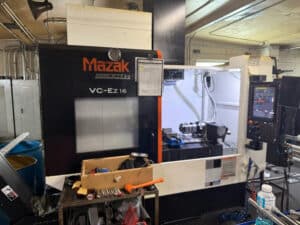
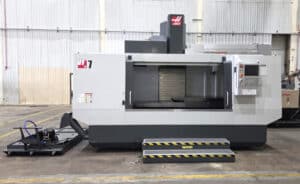
For milling work, used CNC verticals provide one way to compare additional independent capacity. Match the second machine to the constrained operations rather than simply duplicating the first. There may be good reasons to keep controls and tooling familiar, but familiarity alone does not establish the right machine size or spindle.
When loading and restart delays are the constraint
A different pattern appears when automatic cycles finish but the machine repeatedly waits for someone to unload, clean the locating surfaces, load stock, and restart. Here, the spindle exists but access to the operator limits its use.
Separate necessary exchange time from waiting. A machine that needs manual attention after every cycle is not automatically a robot application. The part must present consistently, the workholding must support the loading method, and the process must distinguish a successful load from a fault. The proposed system still needs time to exchange parts.
Start by identifying the recurring work that could use that system. If only a small portion of the schedule has suitable stock, fixturing, and repeat demand, do not assign automation’s potential effect to the whole shop.
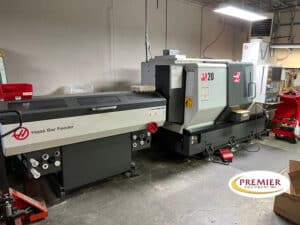
The distinction also matters in turning. A bar-fed part family is different from irregular castings that require individual loading decisions. Compare used CNC lathes against the actual stock and handling method. The capacity question comes first; the feeder or loader specification follows it.
When setups consume the day
A setup problem is easy to mistake for a shortage of machines. The spindle stands still, but the operator is busy finding tools, assembling fixtures, establishing offsets, or resolving a first-piece issue. A faster loader cannot do most of that work.
The Lean Enterprise Institute’s explanation of setup reduction distinguishes internal setup work, which requires a stopped machine, from external work that can occur while it runs. That distinction is more useful here than treating every changeover minute as unavoidable lost capacity.
Preparing tools, staging material, and arranging the next fixture may be external work if the process and staffing allow it. Final location or another operation tied to the machine may remain internal. Moving preparation outside the stopped-machine window does not eliminate the labor. Someone still has to do it at the right time.
A palletized process can address this boundary when the parts and fixtures fit. Premier’s used horizontal machining centers are relevant to that comparison, but a pallet changer is not a universal cure for setup variation. Programs, tools, and fixtures still need preparation, and a new part may still require prove-out.
A hypothetical shift shows why the categories matter
Consider an illustrative 420-minute production window, not a measured Premier customer result. Suppose the schedule completes 18 parts with 15 minutes of automatic machine occupancy per part. That uses 270 minutes. Necessary manual exchange takes two minutes per part, using another 36 minutes. Setups consume 90 minutes, and other stops consume 24 minutes.
The total is 420 minutes. There is no separate waiting-for-an-operator category in this example. Calling all noncutting time a loading opportunity would be wrong. A loader would still need an exchange cycle, and the 90 setup minutes would remain unless the project specifically changes those tasks.
Now consider a different hypothetical record with the same part count and automatic cycle: 270 minutes occupied, 36 minutes exchanging parts, 54 minutes waiting for the operator, 36 minutes in setups, and 24 minutes in other stops. That also totals 420 minutes.
The second record contains a loading-related waiting problem that the first does not. It gives automation a different problem to address. It does not prove that every waiting minute is recoverable, or predict how many additional accepted parts the shop will make. Real exchange timing, faults, labor availability, and the next constraint must be established separately.
Follow the part beyond the CNC
More available spindle time is useful only if the rest of the route can support the work. Look at what happens immediately before and after the constrained operation. Material preparation can starve the CNC. Deburring, washing, or final measurement can hold completed work afterward.
Look at shared people. A second machine may need the same programmer, setup specialist, or quality resource as the first. A loading cell may free an operator from repetitive exchanges but create work in replenishment, changeovers, and recovery. Assign those responsibilities in the proposed process rather than assuming they disappear.
The constraint can move. That is not a reason to avoid a project. It is a reason to describe the next likely limit before placing an order. A useful proposal explains both the time it addresses and the work that remains unchanged.
Compare complete operating arrangements
Put two realistic arrangements beside each other. For another machine, describe which jobs move, who sets them up, and where duplicate tooling or fixtures are needed. For automation, describe which part families qualify, how they are presented, and who handles replenishment and exceptions.
Include installation, integration, workholding, programming, training, and the shop’s transition period in the comparison. A used machine’s purchase price and a loader’s equipment price are not equivalent project scopes. Neither establishes a payback period on its own.
Compatibility is part of feasibility, not an afterthought. An existing machine may need a supported interface, workholding changes, or other provisions before it can use the proposed handling system. Have the OEM or integrator define that scope for the actual machine and control. Do not treat “automation ready” as an explanation of what is included.
Have a qualified integrator assess the complete cell’s risks, guarding, interlocks and recovery procedures before operation.
Once the capacity decision points toward handling automation, Premier’s guide to adding robotics to used CNC machines covers that next subject. The decision here is whether handling is the constraint worth addressing at all.
Give the buying decision a specific job
A useful equipment brief says more than “we need more capacity.” It identifies the part family, the constrained operation, the observed machine and operator time, and the work the purchase is supposed to change.
If ready work waits behind sustained machine occupancy, compare additional machining capacity. If completed cycles wait for handling, compare a feasible loading arrangement. If changeovers dominate, work through preparation and setup structure before attributing the shortage to spindle count. Some shops will need a combination, but the sequence matters.
Bring that brief to Premier when discussing used equipment. It gives the conversation a practical starting point and makes it easier to reject a machine that adds capability without addressing the shortage. Buy against the observed constraint, not against a general promise that more equipment or more automation must be better.
Frequently asked questions
Should I automate before buying a second CNC machine?
Not automatically. Automation deserves priority when a feasible handling system addresses repeated waiting or manual exchange at the constrained operation. Another machine deserves comparison when ready work waits behind sustained machine occupancy and the shop can support parallel operation.
Does low spindle utilization mean I need automation?
No. The stopped time may come from setups, missing programs, material delays, quality decisions, or a lack of work. Identify the cause and distinguish necessary exchange from waiting. A loader addresses only the activities its proposed process actually changes.
Can another machine help a high-mix shop with long setups?
It can provide a separate place to run work or preserve a recurring setup, but it also needs tooling, space, and qualified people. Compare that arrangement with moving preparation outside machine downtime. Do not assume the same setup team can support extra equipment without conflict.
What should I measure before comparing the options?
Measure automatic machine occupancy, necessary exchange time, operator waiting, setups, other stops, and accepted output for representative work. Record which manual tasks overlap with machining. Then identify the constrained operation across the route, not just the busiest-looking machine.