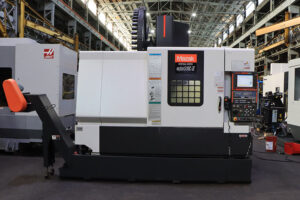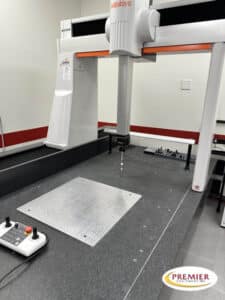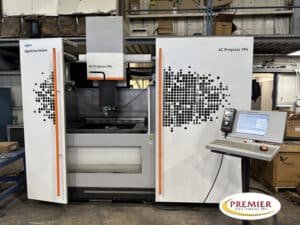

A hardened die plate with a through-opening, a mold insert with a blind rib, and a component needing a small passage may all call for EDM. They do not call for the same EDM machine.
Start with the feature you cannot make economically by conventional cutting. Wire EDM follows a through-profile. Sinker EDM forms a cavity with a shaped electrode. Hole drilling EDM makes holes with an advancing electrode, often a rotating tube. That distinction should narrow the equipment conversation before you compare brands, years or asking prices.
The wire EDM vs sinker EDM decision is mostly about geometry and access. Hardness explains why EDM may belong in the process, but it does not tell you which type to buy. Premier’s used EDM machine inventory is the place to compare available equipment once the process fits the work.
Start with the material and the feature
Conventional EDM needs an electrically conductive workpiece. Hardened tool steel, titanium and many other difficult-to-machine metals can qualify. Ordinary nonconductive plastic does not become an EDM candidate simply because its shape is difficult to mill.
Electrical discharges remove material across a small gap between the electrode and the workpiece. The electrode does not cut by pressing an edge into the metal. That helps with thin features and hard materials, but it does not make fixturing, temperature or material condition irrelevant.
Think about the finished feature in section. Does the opening continue through the part? Does it stop at a floor? Is it a round passage whose depth makes a conventional drill troublesome? Those questions separate three different production methods. A drawing that looks straightforward from above can hide the detail that rules a machine out.
Wire EDM needs a path through the work
Wire EDM continuously feeds an electrode wire between guides and cuts along a programmed path. Sodick’s wire EDM description explains the thin-wire electrode and noncontact erosion process. Its current range also shows that wire machines vary in fine-wire capability, dielectric system and taper applications. Those features are not interchangeable across every used machine.
A through-slot, punch profile or die opening is a natural starting point. If the contour is enclosed inside the stock, the wire needs a start hole. An outside profile can often begin at an accessible edge. The part and fixture must leave a workable wire path and room for the upper and lower guides.
A blind pocket with an intact floor is a different job. Standard wire EDM is not the substitute for a sinker simply because both use sparks. The wire has to pass through the work along the cutting line.
Wire diameter and the discharge gap limit inside-corner geometry. A very small specified radius may require finer wire, appropriate guides and suitable cutting conditions. Finer wire is not a free upgrade. It changes the process window and can affect cutting rate and handling. Have the actual corner requirement reviewed rather than assuming that a sharp-looking sample establishes capability.
Taper cuts deserve the same care. Machines with independent upper-guide movement can produce tapered features, but the usable angle changes with workpiece height, guide arrangement and the specific machine. A maximum taper figure in a brochure is not permission to cut that angle through any thickness.
There is also a loose piece to manage. Once a closed contour is cut, the slug can move, pinch the wire or damage a finished surface. Support, tabs and the sequence for releasing the slug belong in the process plan. EDM has low cutting force, not freedom from workholding decisions.
Sinker EDM starts with an electrode you must make
Sinker EDM uses a shaped electrode to produce a corresponding cavity. Graphite and copper are common electrode materials. Sodick’s sinker EDM explanation describes the shaped-electrode process and its use in mold and cavity work.
This is the route to consider for a blind cavity, a deep narrow rib or an internal detail that an end mill cannot reach without an unsuitable tool. The electrode approaches the feature along a planned path. It cannot pass through solid material to reach a completely enclosed cavity, and an undercut still requires an achievable electrode motion and withdrawal path.
The electrode is a manufacturing job of its own. Someone must design it with the discharge gap and intended motion in mind, machine it, establish its location and hold it repeatably. Electrode wear affects the work, particularly where fine edges and small details matter. Roughing and finishing may require different electrodes or different allowances.
That changes the buying decision. A shop with spare electrode-making capacity and familiar workholding has a different starting point than a shop that would subcontract every electrode. If electrode production needs another machine, compare the required tooling and material handling with suitable CNC vertical mills. A general-purpose mill is not automatically ready for graphite dust or fine electrode work.
Flushing becomes harder in deep, narrow features. Debris must leave the spark gap without creating unstable machining conditions. Electrode lift cycles, orbiting strategy and fluid access can affect the result. The cavity that looks best on a sinker’s application page may still need considerable process development on your particular part.
Hole drilling EDM can support wire work or make the finished feature
A small-hole EDM is often the practical way to put a start hole in hardened stock before wire cutting. Sodick’s small-hole EDM page distinguishes that application from production work such as cooling holes and small component features. It describes rotating tubular or solid electrodes and dielectric flushing.
For wire preparation, the start hole needs to suit the wire-threading method and fit within material that will be removed. Its position affects the lead-in and the remaining stock around the final contour. A start-hole machine can therefore remove a bottleneck without replacing the wire machine.
A finished hole has a different job. Diameter alone is not enough to approve the process. Depth, taper, straightness, entrance condition, surface requirements and the exit location can matter. A machine that produces acceptable start holes is not automatically qualified to make a customer’s finished cooling passages.
Breakthrough deserves particular attention when another wall sits behind the hole. The electrode cannot simply advance without regard to what is beyond the intended exit. For an angled hole, the fixture or machine axes must establish the angle and provide access for the guide and electrode.
Electrodes wear as the hole progresses. Their diameter, guide support and flushing arrangement affect the result. Discuss the hole as a complete feature rather than treating an electrode diameter as a finished-hole guarantee.
Use EDM where it solves the difficult operation
Consider a hardened tooling plate that needs an internal through-profile with small corner radii. Wire EDM is the first process to investigate. A small-hole EDM may create its starting point, but the hole driller does not generate the final profile.
Now consider a mold insert with a deep blind rib. A sinker may finish the rib after milling removes accessible bulk material. The shop needs an electrode plan as well as a machine plan. Buying wire capacity does not solve the blind-feature requirement.
For a narrow passage through a conductive, difficult-to-drill component, small-hole EDM may be the candidate. If the drawing controls the passage’s internal surface or flow performance, the machining plan must address those requirements rather than stopping at breakthrough.
These are application examples, not proof that every part in those families requires EDM. Milling and conventional drilling may still be faster and less expensive where tool access, material and tolerances permit. Removing a large open pocket entirely by EDM can waste time when a mill could remove the bulk first.
Finish requirements change the production route
A rough cut and a finished feature are different milestones. Wire EDM may use skim cuts after the main cut to improve size and surface finish. Sinker work may need separate roughing and finishing conditions. Those operations belong in the cycle estimate.
EDM is a thermal removal process. The customer may control the recast layer, surface integrity or subsequent finishing, especially on demanding service parts. Do not treat a smooth-looking surface as proof that those requirements have been met. Agree on the applicable process specification and acceptance method before committing to production.
Residual stress in the stock can also show up as movement when material is removed. Low cutting force does not prevent a thin section from moving after a contour releases it. Material preparation, machining sequence and final measurement need to work together.
Avoid buying against a universal tolerance promise. The result comes from the particular machine, material, feature, setup and cutting strategy. A representative application trial gives the discussion more substance than a best-case specification alone.
Compare complete processes before comparing prices
Wire work consumes wire and requires the appropriate guides, fluid care and programming. Sinker work adds electrode production and electrode management. Hole drilling brings its own electrodes, guides and flushing needs. These are different operating commitments.
Automatic threading or an electrode changer can help unattended operation, but the setup still needs proving. Confirm the actual equipment included with a used machine.
If funding is part of the decision, discuss the complete equipment package through Premier’s used CNC financing options. Confirm eligibility and covered costs for the proposed purchase rather than assuming accessories and startup work are included.
Bring Premier the drawing, material condition, recurring quantities and the operation causing trouble. Contact the equipment team to compare machines around that work. The useful purchase is the machine that handles your difficult feature without creating an unplanned process elsewhere in the shop.
Questions about choosing an EDM process
Can wire EDM make a blind pocket?
Standard wire EDM needs a through-path for the wire. A blind pocket with a floor generally points toward sinker EDM or milling, depending on its geometry and access. Wire cutting and sinker machining are not interchangeable methods.
Does sinker EDM require a custom electrode?
Shaped cavity work usually requires an electrode made for the feature, with allowances for the discharge gap and machining strategy. Include electrode design, manufacturing, holding and wear in the process plan rather than budgeting only for machine time.
Is hole drilling EDM only for wire start holes?
No. Start holes are one application. Suitable small-hole EDM equipment can produce finished features, but the required diameter, depth, geometry and surface condition must be qualified for that job. Start-hole performance alone does not establish finished-hole capability.
Should all hardened parts go to EDM?
No. Hardness can favor EDM, but accessible features may still suit hard milling, grinding or other cutting methods. Choose EDM for the feature and process problem it solves, then compare the full route to an accepted part.