
A good VTL search usually starts with a part that no longer fits the easy machines on the floor.
Maybe the job is a ring, valve body, wheel, large flange, pump housing, casting, coupling, or energy part. Maybe the current lathe can make it, but only with too much handling. Maybe a shop has a contract in front of it and needs vertical capacity faster than a new machine can arrive.
That is when buyers start asking about buying a vertical turning lathe. The brand matters. The model matters. The control matters. The bigger issue is whether that machine makes the job easier to run after it lands on your floor.
The used VTL market does not work like a catalog purchase. Inventory changes. Models come and go. Two machines with the same badge can be very different buys because of age, control, options, tooling, maintenance, application history and how soon the machine can move.
Why VTL demand is getting more interesting right now
Recent trade coverage has been leaning hard into large part machining, process planning, automation and fewer setups. That matters for VTL buyers.
Production Machining covered large scale multitask machining in late July, including big parts, internal machining, in-process measurement, automation and complete machining in one setup. Modern Machine Shop has also been pushing an IMTS 2026 theme that shops should walk the show with a process mindset, not a machine shopping list.
That is the right way to think about a used VTL. Do not shop it as a big vertical lathe sitting by itself. Shop it as part of a process. Loading. Workholding. Tooling. Control familiarity. Setup time. Inspection. Rigging. Cash flow. Delivery date.
A VTL can be the machine that lets a shop bring larger work in house. It can also become an expensive piece of floor space if the buyer only shops swing and price.
Okuma vertical lathes
Okuma is one of the names buyers ask about for a reason. Shops that like Okuma usually like the control, the build and the way the machines feel under steady work.
For VTL buyers, Okuma’s own VTL guidance is a useful reminder. Vertical lathes are about more than size. They help with heavy workpieces because gravity helps the part sit on the table. Okuma also points to castings, pump housings, aircraft parts, heavy equipment parts and energy field parts as natural VTL work.
That is the type of work where a used Okuma vertical lathe can make sense. The buyer still has to look at the specific machine, not the name alone. Control generation, table size, swing, turning height, tooling, service history and whether the shop already knows Okuma controls all matter.
If the part is smaller or the work is normal turning, a used CNC lathe may be a better buy. A big vertical machine should earn its keep.
You Ji and heavy ram style VTLs
You Ji machines show up often in VTL conversations because they cover the heavy vertical turning space well. Modern Machine Shop has written about VTL work where a You Ji machine helped a manufacturer bring large coupling components in house and reduce the need to send work outside.
That story is useful because the nameplate is only one piece. It is about reach, rigidity and access. The shop needed a machine that could handle tall, flanged parts and reach surfaces that were difficult on a more basic vertical ram setup.
That is one reason buyers should look closely at ram configuration, tool access and live tooling instead of stopping at swing. A machine may have enough diameter and still struggle with the feature you care about.
When a used You Ji VTL is available, the buyer should talk through the actual work. Big rings and flanges are one conversation. Deep features between shoulders are another. Heavy interrupted cuts are another.
Toshiba and older heavy vertical boring mills
Toshiba comes up often around heavier vertical boring mill and large part work. These machines can be attractive when a shop needs serious table capacity, large bores, facing and heavy-duty support.
Older heavy machines deserve a calmer conversation. Some can be excellent buys if they have been cared for and still fit the job. Others can eat up the money a buyer thought they saved. Age by itself does not answer the question. Neither do hours.
Look at what the machine cut, what environment it came from, what control is on it, whether parts and service are realistic, what tooling is included and what has to happen before it can make a good part again.
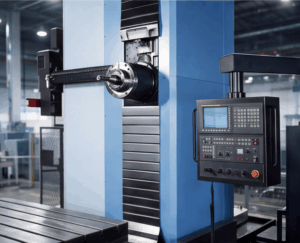
For some jobs, a used CNC boring mill may be a cleaner answer than a VBM. If the job needs side access or long horizontal travel, compare both before getting locked into one machine type.
Giddings and Lewis for large legacy work
Giddings and Lewis has a long name in heavy machine tools. Buyers looking at large legacy vertical equipment often care less about shiny features and more about mass, table capacity, reach and whether the machine can still be supported.
That is a different buying mindset than shopping a late model compact VTL. The questions get practical fast. Can your building take it? Can you move it? Can you power it? Does it need a pit or special foundation work? Does the control fit your people? Is the machine worth modernizing or is it better to keep looking?
Those are not small issues. Rigging and trucking alone can change the math on a large vertical machine. Premier can help coordinate that conversation, but the buyer still needs to understand the building and production plan before chasing a heavy machine across the country.
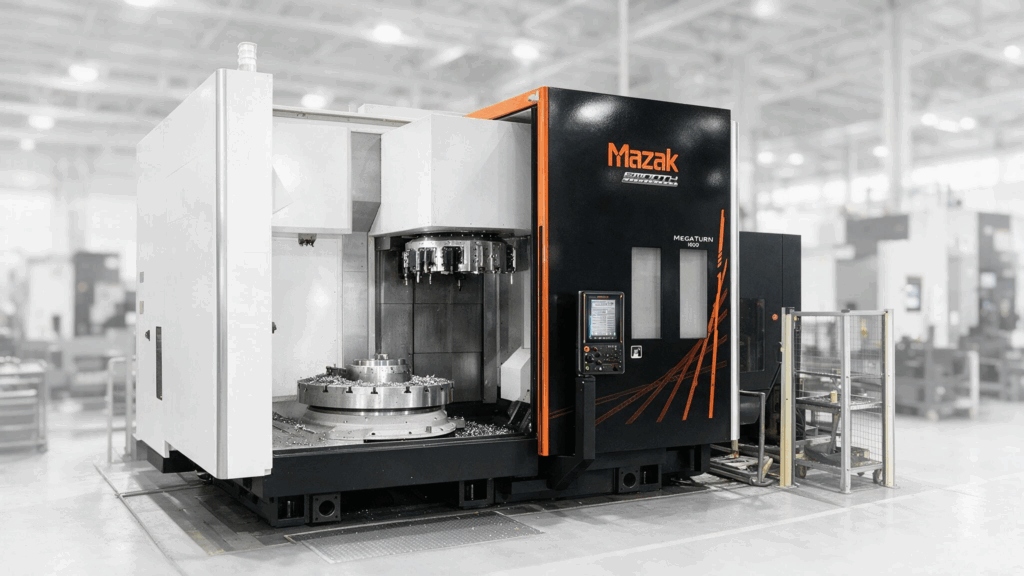
Mazak and the multitasking question
Mazak is often part of the broader large part and multitasking conversation. Buyers know the name, and many shops are comfortable with Mazatrol or with Mazak’s approach to combining operations when the job fits.
For VTL shoppers, Mazak may come into the discussion when the real goal is fewer setups rather than a plain vertical turning machine. If the part needs turning plus milling or drilling, the right multitasking platform may reduce handling and help keep the process under one roof.
Do not force that answer. If the work is straightforward large diameter turning, a simpler VTL may be the better buy. If the work keeps bouncing between turning and milling, it is worth comparing multitasking options, 5-axis machines and used CNC horizontals before spending the money.
DN Solutions, Doosan and newer production-minded buyers
Doosan and DN Solutions belong in the conversation for buyers who want newer equipment, familiar controls and a more production-minded fit. The used market can have strong options here, depending on what is available at the time.
The same rule applies. Do not buy the brand in your head. Buy the machine in front of you. Check the control, options, tooling, service path, available records, seller timing and whether the machine can be moved when your job needs it.
A late model used machine can save time compared with waiting on new equipment. It may also preserve capital for tooling, workholding and material. If the job is contract-backed, used CNC financing may be worth discussing before the decision gets too narrow.
The model number is only the start
Model numbers matter because they point you toward size, capacity and configuration. They do not tell the whole story.
Two used vertical turning machines can look similar online and be miles apart on the floor. One may include tooling that saves the buyer time. Another may need work before it is ready. One may come from a shop that maintained it carefully. Another may have spent years cutting heavy material across multiple shifts.
A good used VTL conversation should cover the machine and the job together.
The buyer should know the largest part diameter, part height, part weight, material, tolerance, current process, required features, facility limits and timing. If the shop already has a control preference, say it early. If the machine has to move fast, say that early too.
Premier’s used CNC VTL and VBM inventory changes as machines are bought, sold and listed. The right move is to call with the work you are trying to run, then compare the available machines against that job.
Recent VTL and large-machine themes buyers should watch
The last month of trade coverage points to a few themes that matter for used buyers.
Large-machine builders are talking more about complete machining, automated tool handling, in-process probing, angular heads and process monitoring. IMTS 2026 coverage is pushing shops to evaluate whole process problems instead of looking at machines as isolated purchases.
For a used VTL buyer, that changes the question. A basic vertical turning machine can still be the right answer. A VTL with live tooling may be a better answer. A VBM, horizontal boring mill or multitasking machine may be better if the job needs access that a standard vertical ram cannot give you.
Do not chase technology for its own sake. Chase the machine that shortens the path from raw part to good part.
How we help narrow the field
Premier Equipment has been buying and selling used CNC equipment since 1988. The value is in knowing which questions to ask before a buyer gets surprised.
That means looking at availability, condition, machine history, seller timing, included tooling, logistics, rigging, power, financing and whether the machine fits the work. If Premier owns the machine and has put it through its process, the team can talk through the condition and what has been done to put it in good operating order.
Used equipment still needs clear expectations. Specs, prices, availability and machine details should be confirmed before purchase. Large machinery should be discussed with riggers, electricians and service people early enough that the move does not become the problem.
Talk through the part before you chase the brand
If you are looking at used VTL brands or trying to compare Okuma, You Ji, Toshiba, Giddings and Lewis, Mazak, Doosan or DN Solutions options, start with Premier’s used CNC VTL and VBM listings.
Then call (407) 786-2000 or email quotes@premierequipment.com. Send the part size, material, current process, timing and any facility limits. The right machine will make more sense once the job is on the table.
FAQ
What are the best used VTL brands to watch?
Doosan, Mazak, Okuma, Toshiba, Giddings and Lewis, Mazak, Doosan and DN Solutions can all belong in the conversation depending on the part, control preference, condition, configuration and current availability.
Is a used VTL better than a horizontal lathe?
A used VTL is usually a better fit for large, heavy round parts that sit well on a vertical table. A horizontal lathe may be better for smaller parts, shaft work or production turning that does not need vertical loading.
Should I choose a VTL, VBM or boring mill?
Choose based on the work. A VTL fits large vertical turning work. A VBM fits heavy boring and table work. A horizontal boring mill may be better when the part needs side access or long horizontal travel.
Does brand matter more than condition?
No. Brand matters, but condition, control, application history, included tooling, seller timing, rigging and support can change the value of a used machine quickly.
Can Premier help compare used VTL options?
Yes. Premier can help buyers compare used VTL and VBM machines against the job, the shop floor, timing, financing needs and logistics before the buyer commits to a specific machine.